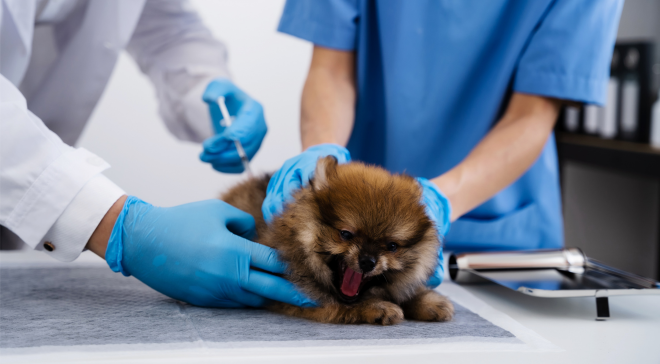
Zoonoses refer to all diseases caused by a pathogen (bacteria, virus or parasite) that can be transmitted from animals to humans and vice versa. In humans, 60% of current infectious diseases are zoonoses.
Caring for human health therefore also means caring for animal health, in line with the “One Health” approach.
In this context, professionals in the veterinary sector are on the front line when it comes to preventing zoonoses. This prevention relies on rigorous control of infectious risk and using solutions that are effective, safe for both humans and animals, and compatible with an environmentally responsible approach.
Zoonoses: understanding the interactions between animal health and human health
Zoonoses serve as a reminder that animal health and human health are closely linked. Their transmission can take many forms. It can occur through direct contact between animals and humans, as in the case of rabies or certain types of avian influenza.
It can also occur via the environment, particularly water, soil or air. Water can transmit certain enteric bacteria and viruses, and soil can spread agents such as those responsible for causing tetanus or anthrax. Transmission via the air occurs either through airborne particles, such as Mycobacterium tuberculosis or Yersinia pestis, or through droplets, as seen in certain canine respiratory coronaviruses or feline herpesvirus.
Some pathogens are transmitted via faeces, such as Salmonella, Toxoplasma or the parasitic worm Anisakis.
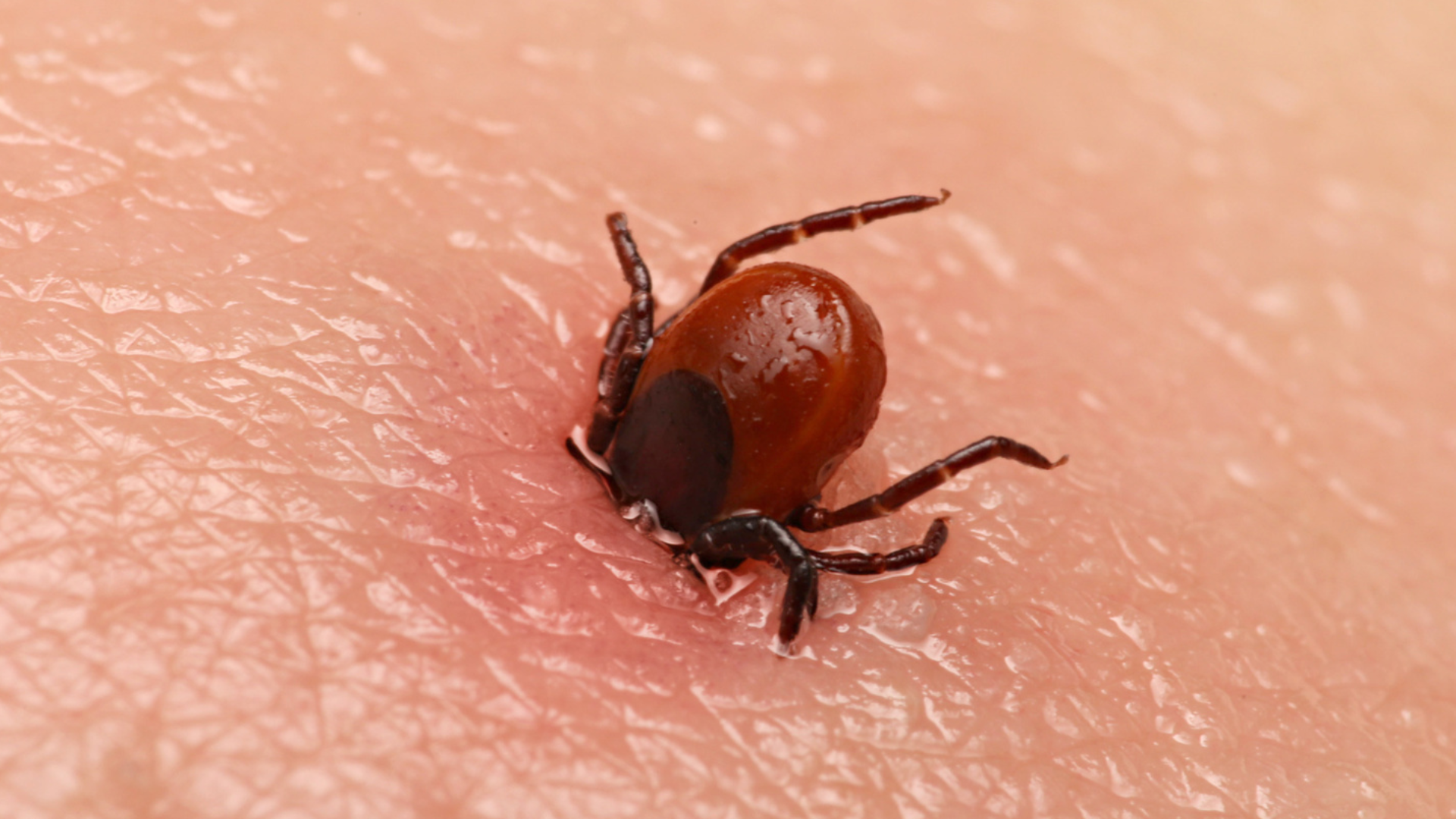
Others are transmitted via a vector, such as mosquitoes for West Nile virus or ticks for Lyme disease.
Finally, the consumption of contaminated food of animal origin is also a significant route of transmission.
The risk is all the more difficult to control because some animals can be asymptomatic carriers. This is the case, for example, with poultry carrying Campylobacter bacteria and sometimes Salmonella, or bats carrying viruses from the coronavirus family.
The reverse is also true; some diseases affect animals without causing obvious symptoms in humans. Foot-and-mouth disease, for example, is usually asymptomatic in humans but affects cattle, goats, sheep and pigs.
Zoonoses: a daily challenge in veterinary settings
Zoonoses constitute a recognised occupational risk for veterinary teams, who can be exposed to pathogens through several possible routes :
- Direct contact with animals during treatment, handling and examinations.
- Contact with biological fluids, such as blood, urine, faeces and vomit.
- Exposure to contaminated surfaces and equipment that can become reservoirs for pathogens (examination tables, cages and kennels, handles, taps and medical equipment).
- Droplets emitted when animals cough or sneeze.
- Certain technical procedures, such as dental treatments, suctioning or cleaning, which may facilitate the spread of infectious agents.
The diversity of species leads to a wide variety of pathogens, making risk even more difficult to control. What’s more, emergency situations and procedures involving technical treatments increase exposure. Lastly, occupational injuries are common (such as bites and scratches), and can provide direct entry points for zoonotic agents.
Numerous zoonotic infections have therefore been documented among veterinary professionals, including salmonellosis, leptospirosis, dermatophytosis, infections with methicillin-resistant Staphylococcus aureus (MRSA), Q fever, bartonellosis and psittacosis.
Certain microorganisms can survive for several weeks, or even months, on surfaces, presenting a risk of transmission to staff or between patients.
In veterinary practices, this health risk is part of a complex operational reality, characterised by a rapid turnover of patients, a wide range of procedures and personnel, as well as significant time pressure. These constraints make it essential to have simple, reproducible, effective and safe hygiene protocols in place.
Controlling the risk of zoonotic diseases therefore relies not only on the management of animals, but on the rigorous control of the entire healthcare environment.
Bio-cleaning: a key tool in the prevention of zoonoses
Bio-cleaning combines two synergistic steps: cleaning, which removes dirt and organic matter, followed by disinfection, which reduces the microbial load. This combination is essential, as the presence of organic matter reduces the effectiveness of disinfectants.
Bio-cleaning in a veterinary practice therefore acts directly on the chain of transmission, limiting surface contamination, reducing environmental reservoirs and preventing cross-contamination between animals, humans and equipment. As a result, it helps to interrupt the various modes of transmission observed on a daily basis.
This requires structured protocols tailored to different areas (consultation, hospitalisation or isolation), with cleaning and disinfection carried out between each patient or as soon as a surface becomes soiled. Particular attention must be paid to frequently touched surfaces, such as examination tables, handles and equipment.
Steam: an effective, eco-friendly solution for cleaning veterinary environments
With its Sanivap range, Oxy’Pharm offers a steam bio-cleaning solution designed for professional environments where efficiency, ease of use and control of infection risk are essential.
Steam bio-cleaning relies on the use of high-temperature steam delivered under pressure, effectively removing dirt, grease and biofilms, even in hard-to-reach areas. This thermal action helps to reduce a wide range of microorganisms (bacteria, viruses, yeasts and spores) without the use of chemicals.
In veterinary practices, this approach allows for cleaning and disinfection simultaneously, leaving no chemical residues, making it suitable for use in the presence of animals. It also facilitates the cleaning of crevices, grates and cages, whilst helping to protect the health of users. It is therefore part of an approach to effective bio-cleaning that respects the healthcare environment, professionals and animals.
A CLOSER LOOK AT THE SP MINI BY OXY’PHARM
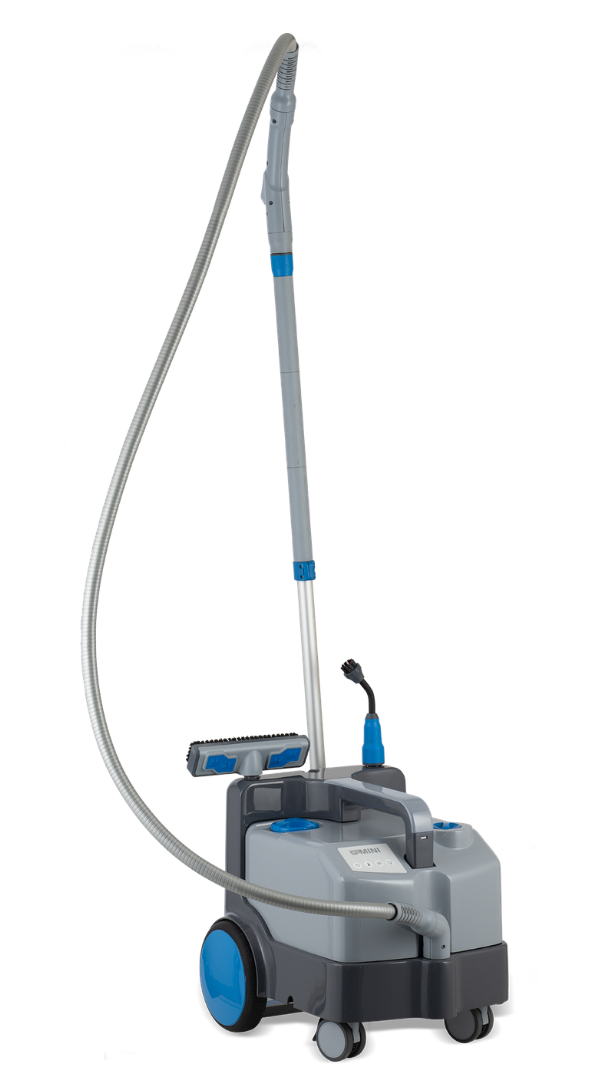
The SP Mini is a compact professional steam bio-cleaning device, designed to integrate easily into daily cleaning routines in veterinary practices.
It combines thermal performance with ease of use, delivering steam at 97°C at the nozzle, a pressure of 5.5 bar and continuous operation for up to 8 hours thanks to continuous refilling.
Its efficacy has been confirmed in accordance with standard NF T72-110, encompassing bactericidal, yeasticidal, fungicidal and virucidal activity. In practice, it removes encrusted dirt and biofilms, effectively treats surfaces, equipment and hard-to-reach areas, and combines cleaning and disinfection in just one step thanks to its range of accessories.
Its ergonomic design and portability make it easy to use in all spaces, even the most confined ones, whilst helping to reduce operator fatigue. As it functions using water alone, without the addition of chemicals, it also helps to reduce the use of consumables and forms part of a more environmentally responsible bio-cleaning system.
HOCl disinfection: a controlled approach suited to veterinary environments
Hypochlorous acid (HOCl) is a disinfectant recognised for its microbiological efficacy. It acts on a broad spectrum of microorganisms — bacteria, viruses, fungi and spores — and can be used in sensitive environments.
In veterinary practices, an HOCl-based solution effectively disinfects frequently touched surfaces and equipment, whilst remaining safe in the presence of animals. Its lack of residues also helps to minimise exposure risks for both animals and staff.
HOCl disinfection is particularly well-suited to the requirements of veterinary care environments.
A CLOSER LOOK AT THE HOCLEAN SOLUTION
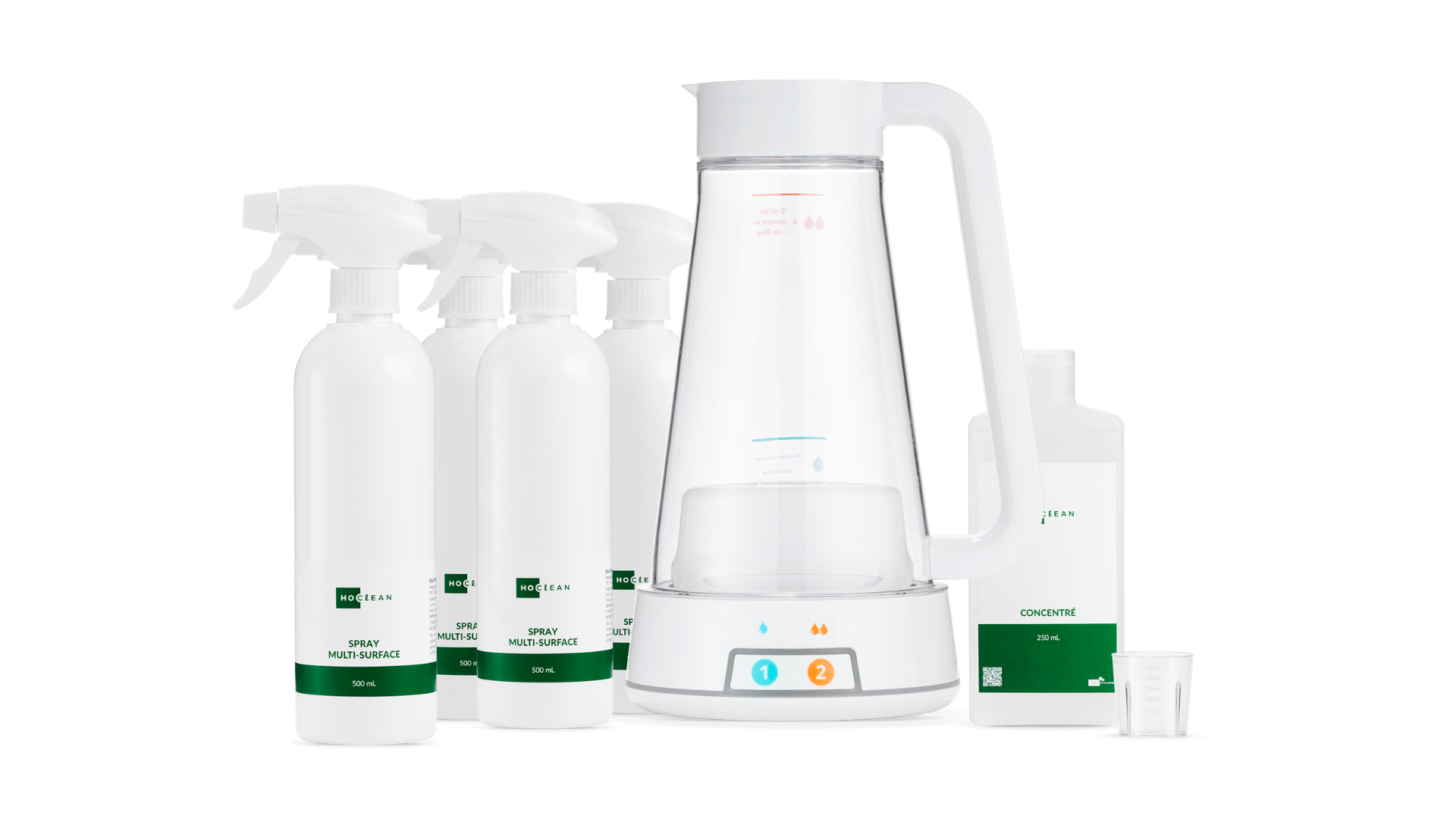
HOClean is based on electrolysis technology that enables the on-site, on-demand production of a hypochlorous acid-based disinfectant solution from a concentrate composed of water, salt and acetic acid.
In just 11 minutes, the device generates a ready-to-use solution, tailored to the daily needs of veterinary facilities.
Its efficacy has been confirmed in accordance with European standards specific to the veterinary sector: EN 1656 (bactericidal activity), EN 1657 (fungicidal activity) and EN 17122 (virucidal activity).
In practice, HOClean enables rapid and reproducible disinfection of high-touch surfaces; it is simple to use and can be easily integrated into existing protocols. On-site production offers several advantages: it reduces the transport and storage of chemicals, allows for better control over the amounts used and helps to reduce waste. A single bottle of concentrate can produce up to 14 litres of disinfectant solution.
The product is available in two formats: HOClean (350ml), for daily use and small surfaces, and HOClean+ (up to 2 litres), for large areas or more demanding environments.
Free from preservatives and additives, biodegradable and food-contact compliant, the solution forms part of an eco-friendly disinfection approach.
Oxy’Pharm: Towards safer and more sustainable bio-cleaning protocols
Solutions such as the SP Mini and HOClean provide tangible, real-world answers to hygiene challenges in veterinary care environments.
The combination of steam bio-cleaning and hypochlorous acid-based disinfection allows for a synergistic approach to surfaces and equipment, combining microbiological efficacy, ease of use and reduced reliance on chemicals.
This synergy contributes to improving control of infection risk by limiting cross-contamination and reinforcing the prevention of zoonoses on a daily basis.
As an expert in bio-cleaning and eco-friendly disinfection, Oxy’Pharm supports professionals in introducing sustainable practices, driven by the judicious use of hygiene solutions
By combining hygiene performance, user safety and environmental responsibility, Oxy’Pharm works alongside veterinary professionals to create healthcare environments that are safer and more respectful of everyone’s health.
Sources:
[1] National Association of State Public Health Veterinarians – Veterinary Infection Control Committee, Compendium of Veterinary Standard: Precautions for Zoonotic Disease Prevention in Veterinary Personnel, 2015.
[2] ANSES, Les zoonoses, quand les animaux contaminent les humains, 20 août 2025 (cité le 17 mars 2026).