Disinfection is a major challenge across many sectors, including healthcare, the pharmaceutical industry, the food industry and biotechnology. Managing microbiological risk lies at the heart of regulatory requirements and quality management systems. Ensuring a pathogen-free environment is essential for patient and consumer safety, as well as for product compliance.
Airborne surface disinfection (ASD) is gradually establishing itself as a reliable solution to these challenges. However, despite being increasingly adopted, this technology remains the subject of numerous misconceptions. Unfortunately, these misconceptions continue to hinder its integration or lead to inappropriate use.
Why do these misunderstandings persist? It is often due to a lack of technical information, but also because of confusion with other disinfection methods.
This article examines the five most common misconceptions about ASD, to enable hygiene, quality and production professionals to get the greatest benefit from this tool..
What is airborne surface disinfection (ASD) ?
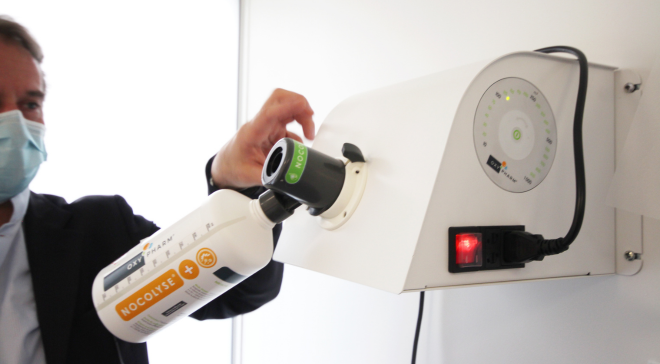
ASD is an automated surface disinfection process using dry diffusion. In practical terms, a device converts a liquid disinfectant into a gas, ensuring even distribution across all surfaces within a space, including the least accessible areas. The treatment is carried out in the absence of people, following a programmed and repeatable cycle.
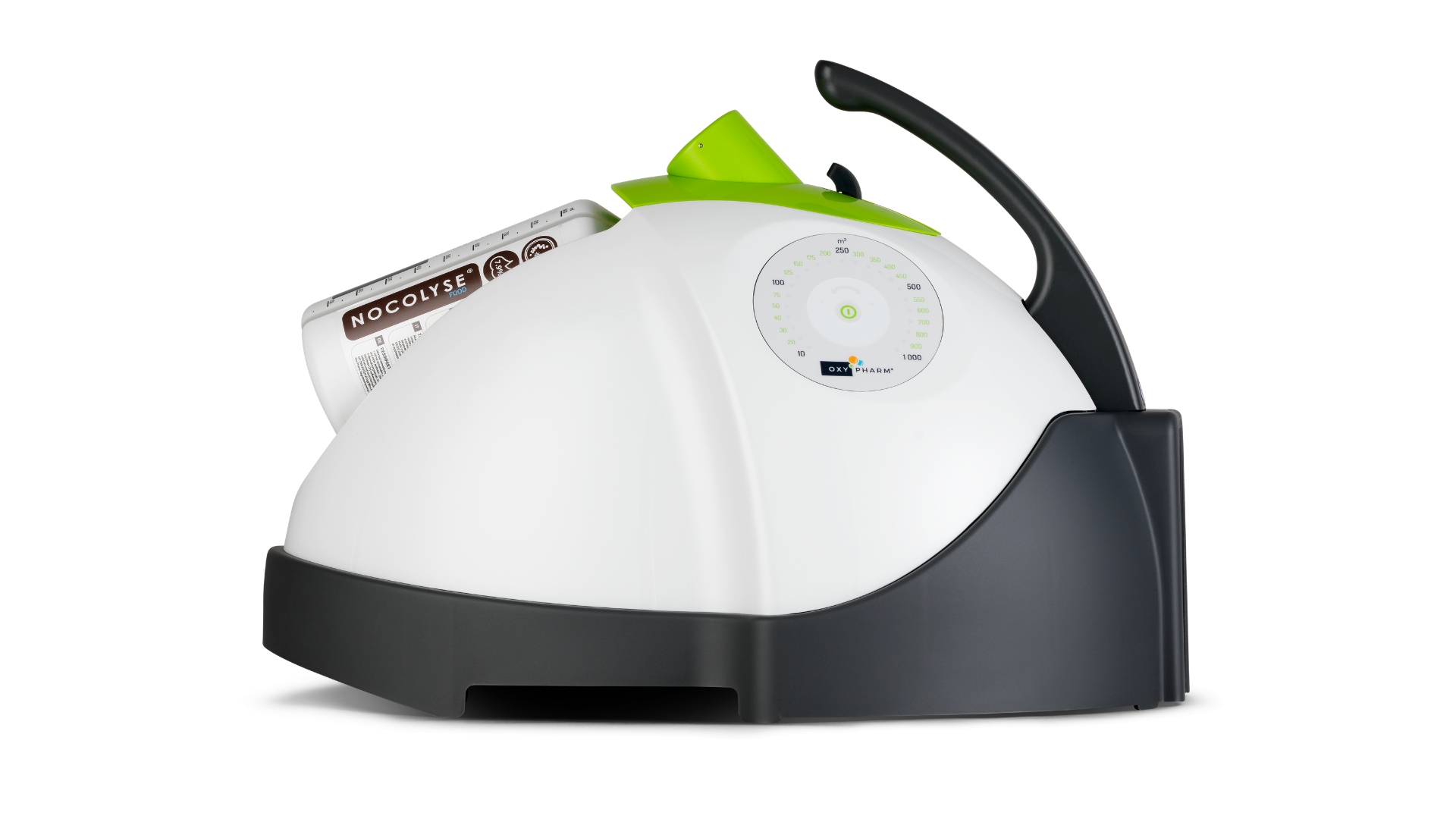
The active ingredient used is hydrogen peroxide (H₂O₂). The Nocotech concept, developed by Oxy’Pharm, combines an automated diffusion device with an H₂O₂-based formulation specially designed for ASD, ensuring controlled microbiological efficacy.
The technology is regulated and validated in accordance with rigorous microbiological protocols, particularly through recognised standards.
Its fields of application are extensive, including hospitals, medical and dental practices, veterinary clinics, the pharmaceutical industry, the food industry, cosmetics, biotechnology and medical transport.
Misconception 1: Airborne disinfection replaces cleaning
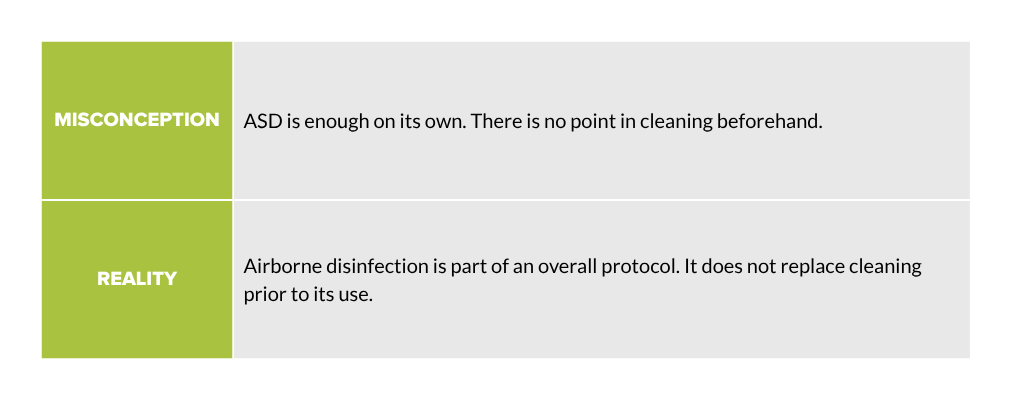
The presence of organic contamination or biofilm on a surface is scientifically recognised as a factor that inhibits the effectiveness of disinfectants. Organic matter traps the active agents and drastically reduces their efficacy. Cleaning is therefore an essential step.
It should also be noted that the high efficacy of the process may have led some users to consider using it on its own. This perception, whilst understandable, is based on a misinterpretation of its role.
ASD is deployed in the second phase, following bio-cleaning. One of its primary functions in managing microbiological risk is in fact to fill the structural gaps in the spectrum of conventional disinfectant detergents. Certain pathogens are resistant to conventional formulations or persist in untreated areas.
ASD treats what and where humans cannot reach, with a uniform concentration of the disinfectant throughout the entire space.
Synergy, not substitution: this is the basis for its inclusion in any rigorous disinfection protocol.
Misconception 2: Airborne disinfection is dangerous
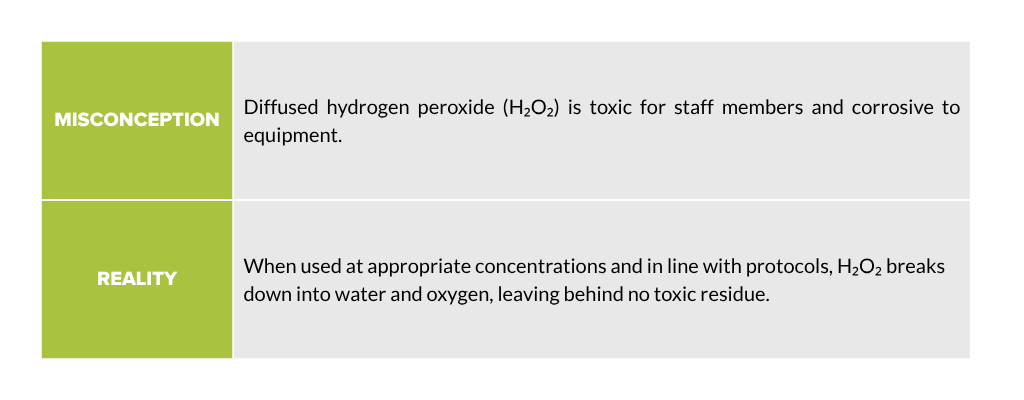
The treatment is carried out without staff present, in accordance with safety protocols. At the end of the cycle, the H₂O₂ naturally breaks down into water and oxygen, leaving behind no toxic residue. Unlike older chemical agents such as formaldehyde, hydrogen peroxide minimises the process’s impact in terms of compatibility, toxicology and environmental consequences. It leaves no persistent residue.
The Nocotech ionising turbine generates a gas that does not wet surfaces. This is a key factor. The risks of condensation or oxidation are therefore significantly reduced when used in accordance with the instructions, meaning that premises equipped with sensitive electronics, computer servers or industrial control systems can be with peace of mind.
The treatment is considered biodegradable and compatible with demanding technical environments, provided that established procedures are followed.
Idée reçue n°3 : La désinfection n’est pas efficace
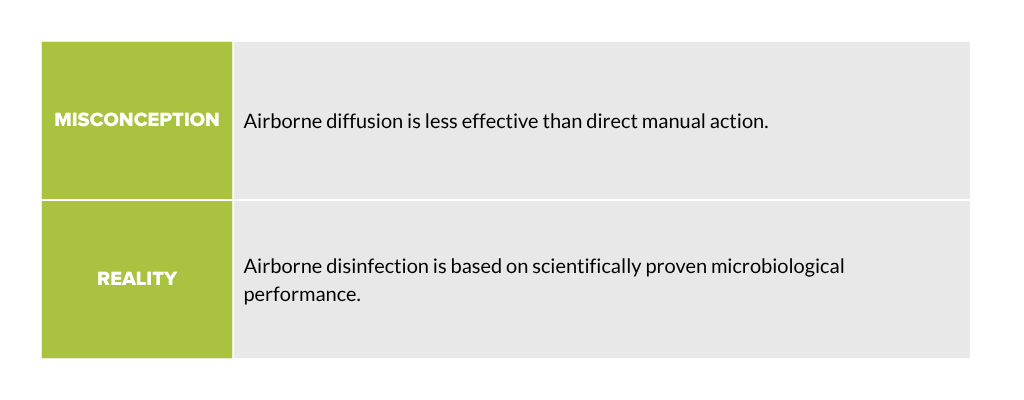

The NF EN 17272 standard specifically governs the assessment of the antimicrobial activity of automated air and surface disinfection processes. It validates the bactericidal, fungicidal, virucidal and sporicidal performance of ASD devices under defined conditions of use. Automated treatment guarantees the required logarithmic reduction for each category of pathogen. The Nocotech process complies with the NF EN 17272 standard.
Compared to manual disinfection, AAD offers a decisive advantage in hard-to-reach areas. Where human intervention is limited by the ergonomics or layout of the premises, airborne diffusion ensures complete and reproducible coverage, without relying on the operator.
Misconception 4: Diffusion does not treat all surfaces
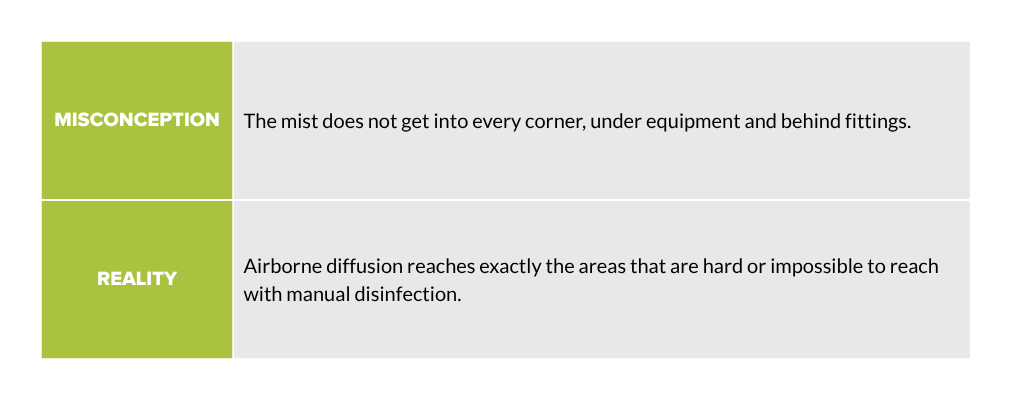
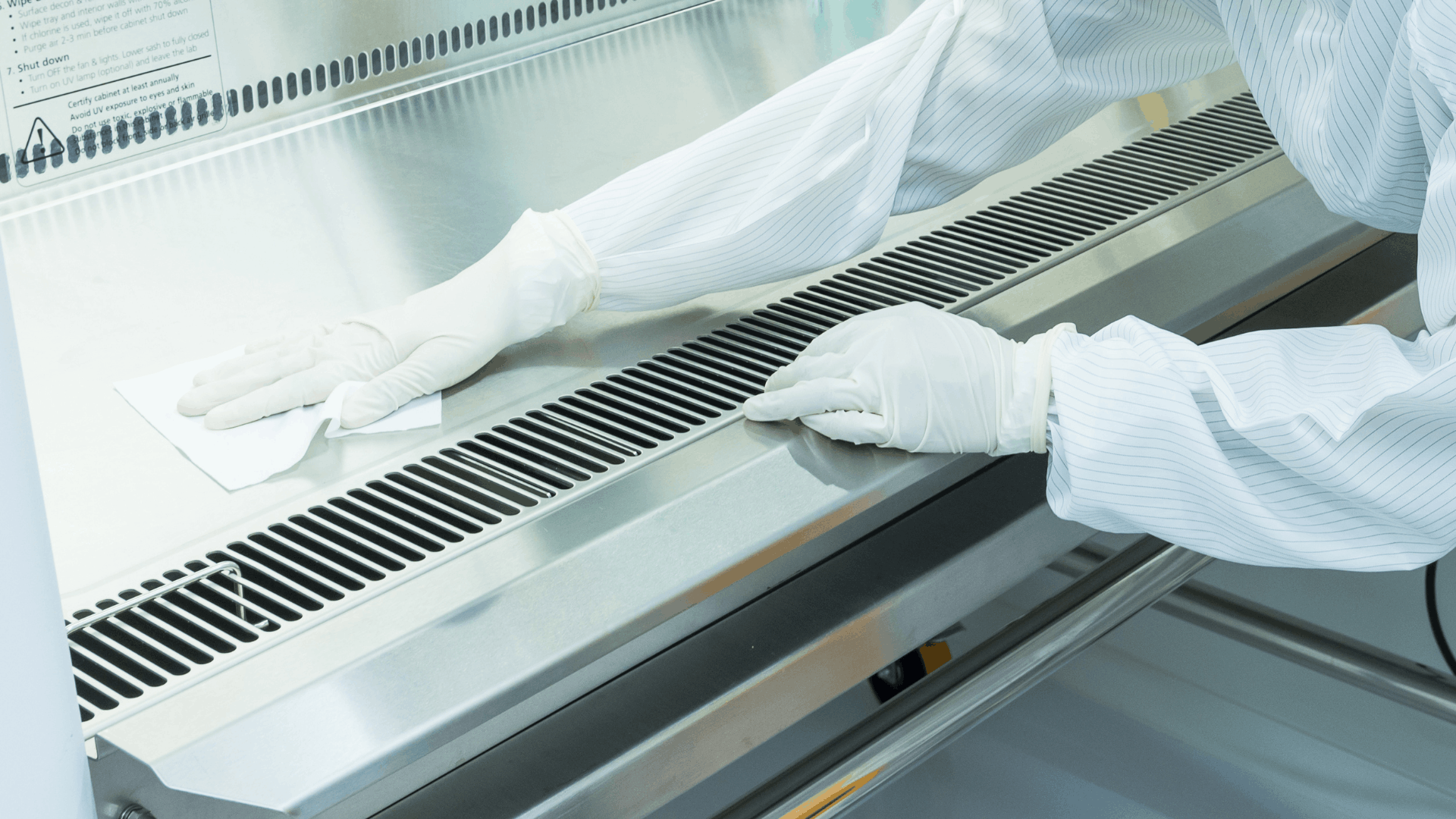
In contrast to manual disinfection, which is limited by physical accessibility, airborne diffusion treats horizontal and vertical surfaces alike, including the undersides of equipment, gaps, cracks, suspended ceilings, and elevated areas. The concentration of disinfectant is uniform throughout the treated space – a fundamental characteristic of the process.
This characteristic is particularly valued in pharmaceutical production environments (ISO cleanooms), refrigerated food-processing storage areas, or any facility where architectural complexity makes exhaustive manual disinfection impossible. It is in these configurations that ASD demonstrates its most tangible added value.
Misconception 5: Disinfection is difficult to implement
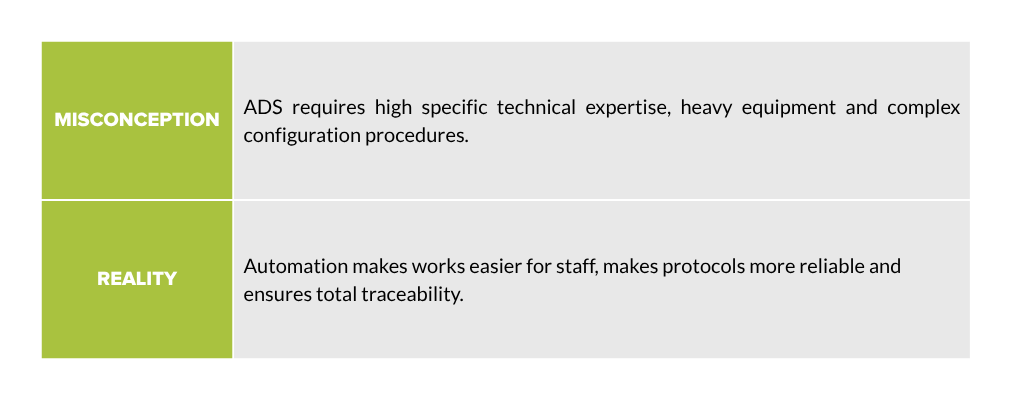
The automated Nocotech treatment clearly illustrates the simplicity of the process. The operator enters the room, initiates the start process, and the cycle runs entirely autonomously. No continuous presence is required. Premises can be treated outside production hours, without the need to mobilise a dedicated team.
The reproducibility of cycles provides a guarantee of reliability that is directly valuable during quality audits – each treatment is identical, fully traceable, and compliant with regulatory requirements.
Staff can be trained quickly, and training is supported by standardised protocols tailored to each type of environment.
ASD: a strategic lever for controlling microbiological risk
Airborne surface disinfection is a reliable, standardised, and effective technology, provided it is properly integrated into a comprehensive bio-cleaning protocol. It meets the requirements of the most demanding environments by ensuring consistent control of microbiological risk, including in hard-to-reach areas for manual disinfection.
It delivers real added value when implemented as part of a well-considered and structured approach.
Oxy’Pharm’s expertise and its Nocotech concept support professionals in introducing solutions that are appropriate, reliable, and compliant with the requirements of the most sensitive environments.