
In the pharmaceutical industry, process control directly determines drug quality and patient safety. Good Manufacturing Practices (GMP) therefore require documented and traceable evidence of equipment compliance and performance.
This requirement is based on a structured sequence: QI, QO, and QP. These three complementary steps govern process validation—from installation through operation under actual conditions—by clarifying the responsibilities between the manufacturer and the user site.
Pharmaceutical Context: Why Validation Is Essential
GMP REQUIREMENTS AS A BINDING FRAMEWORK
GMPs form the regulatory foundation of the pharmaceutical industry and require a quality approach based on evidence and traceability. Every piece of equipment, process, and critical parameter must be controlled and justified through a documented demonstration.
Process validation meets an auditability requirement: each step is formalized, carried out according to defined procedures, and recorded in reports, thereby constituting a central element of regulatory compliance.
RISK MANAGEMENT
The Quality Risk Management (QRM) framework places control of Critical Process Parameters (CPPs) at the center of any validation process. These parameters directly determine the Critical Quality Attributes (CQAs) of the drug: purity, concentration, sterility, and stability.
Equipment qualification makes it possible to anticipate process deviations, prevent nonconformities, and avoid critical situations such as batch recalls.
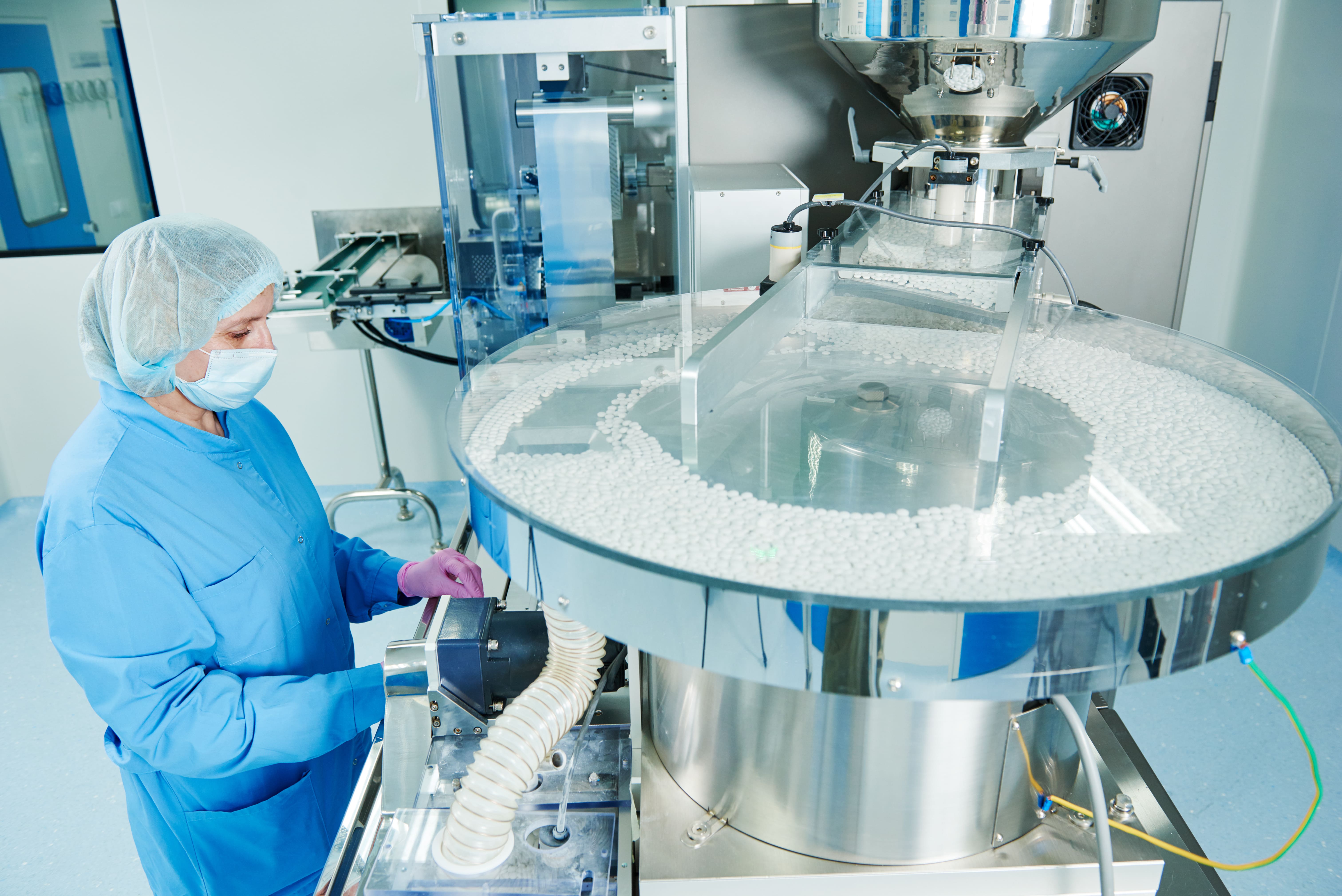
Far from being a mere administrative formality, it serves as a control tool that promotes industrial reproducibility, reliability, and efficiency.
- Process validation is not an administrative requirement.
- It is a scientific demonstration of control that ensures the safety of the drug, from production all the way to the patient.
QI – Installation Qualification: Structural Compliance
DEFINITION AND SCOPE
Installation Qualification (IQ) is intended to verify that the delivered equipment complies with the manufacturer’s design specifications and that it has been properly installed in its host environment.
This step is primarily the responsibility of the manufacturer, with joint validation by the user site.
KEY STAGES OF IQ
- Document review: compliance of the technical file (user manuals, technical data sheets, certificates of conformity, layout drawings, electrical diagrams/P&IDs).
- Compliance with the order: verification of part numbers.
- Visual integrity: physical inspection upon receipt (absence of damage, overall condition).
- Component verification: identification and inspection of constituent parts.
THE IQ DECISION: COMPLIANT OR NON-COMPLIANT
Following these inspections, the IQ protocol establishes a formal decision. The acceptance criteria, defined in advance, are used to determine whether the installation is compliant. In the event of non-compliance, corrective actions are initiated before proceeding to the next step. A compliant installation does not yet guarantee operational performance; it simply paves the way for the OQ.
- QI establishes the essential technical and documentation foundation.
- Without it, no subsequent step is valid.
OQ – Operational Qualification: Mastery of Functions
DEFINITION AND SCOPE
The purpose of Operational Qualification (OQ) is to demonstrate that the equipment operates in accordance with its design, across all intended operating ranges, and under controlled conditions.
This phase is typically conducted by the manufacturer or a specialized service provider to validate the machine’s intrinsic capability, regardless of the specific conditions at the user’s site.
QA PROTOCOLS: A CLOSER LOOK AT DYNAMIC TESTS
Unlike IQ, OQ is based on dynamic tests:
- Water tests: a reference protocol to simulate the equipment’s operation under neutral, reproducible, and controlled conditions;
- Flow rate testing and metrology: flow rates are measured and validated according to the specifications in the technical specifications. The weighing method (1 g = 1 mL) serves as the reference protocol for volumetric verification: rigorous, traceable, and recognized by regulatory authorities, it ensures the reliability of measurements in a controlled environment;
- Comparison with expected values: Each measured result is compared with the target values defined in advance in the specifications. Analysis of any deviations allows for a determination of the equipment’s functional compliance.
THE OQ DECISION: DOCUMENTED VALIDATION
Following dynamic testing, the OQ report formalizes the results and either confirms compliance or triggers the necessary corrective actions. The OQ confirms functional compliance in a controlled environment, but does not yet constitute validation under actual operating conditions. That is precisely the purpose of the QP.
- The OQ validates the intrinsic behavior of the equipment.
- It says nothing about the actual conditions at the pharmaceutical site.
PQ – Performance Qualification: Toward Validation Under Real-World Conditions
QP: DEFINITION AND ISSUES
Performance Qualification (PQ) is the third and final step in the three-part process. Its objective is to verify that the equipment meets the expected performance standards under the actual operating conditions specific to the pharmaceutical site. Unlike IQ and OQ, PQ takes into account the client’s specific requirements: site-specific processes, unique configurations, formulations, and production environments.
UNE RESPONSABILITE QUI INCOMBE AU SITE UTILISATEUR
The PQ is conducted by the user site, or under its direct responsibility, with possible support from the manufacturer. It is integrated into the site’s Master Validation Plan (MVP) and falls under the pharmaceutical responsibility of the marketing authorization holder. By validating performance under actual conditions, the PQ provides the final proof of process control, which directly determines the site’s GMP compliance.

- QP is the final validation.
- It directly impacts the pharmaceutical site’s regulatory compliance and its ability to ensure the quality of the drug placed on the market.
How is PQ actually implemented at a pharmaceutical site? What protocols, acceptance criteria, and integration with the PDV are involved? This is the focus of Episode 2, dedicated to performance validation under real-world operating conditions, applicable to the pharmaceutical industry and all highly regulated industrial sectors.
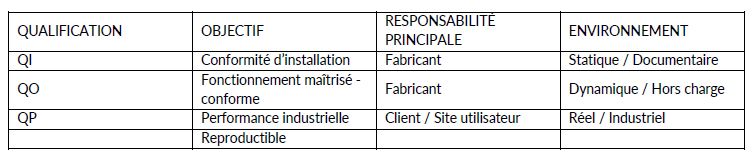
Each step builds on the previous one. The IQ/OQ/PQ sequence forms an inseparable continuum of evidence.
- You may also want to read the following article: The Crucial Role of IQ, OQ, and PQ in Process Validation
IQ / OQ / PQ : Key Points to Remember
- Process validation is an essential GMP requirement, based on a documented and auditable demonstration.
- The IQ/OQ/PQ sequence forms a continuum of evidence: each step determines the next.
- IQ and OQ are primarily the responsibility of the manufacturer; they establish the structural and functional compliance of the equipment.
- PQ is conducted by the user site: it validates performance under actual operating conditions and ensures the site’s GMP compliance.
- Qualification is not a mere formality. It underpins the reliability, reproducibility, and safety of the drug.