
The validation of disinfection processes in critical industrial environments is based on a rigorous three-part approach: Installation Qualification (IQ), Operational Qualification (OQ) and Performance Qualification (PQ). Whilst the first two stages confirm technical compliance and proper operation under no-load conditions, PQ marks the decisive transition from theoretical performance to scientific proof under real-world conditions.
In the pharmaceutical industry and sectors subject to Good Manufacturing Practice (GMP), controlling the risk of contamination is an absolute regulatory requirement.
In these environments with a high level of microbiological control, airborne surface disinfection (ASD) is now a recognised method for the terminal bio-decontamination of critical areas. But how can the effectiveness of this process be demonstrated, in a scientific and auditable manner, within a real-world environment? This article details the objectives of Performance Qualification (PQ), its microbiological methodology, its success criteria, and the expert support developed to meet auditors’ requirements.
What is the purpose of Performance Qualification (PQ) ?
VERIFICATION OF COMPLIANCE UNDER REAL OPERATING CONDITIONS
Unlike the IQ and OQ phases, PQ must be carried out in the final production environment.
It takes into account:
- The exact layout of the premises.
- The presence of equipment.
- The actual load.
- Site-specific operational constraints (air handling systems, volume variations).
↪ PQ no longer validates just a single machine; it validates the interaction of a process with a given industrial ecosystem.
A KEY STEP IN ENSURING DRUG SAFETY
In the pharmaceutical industry, PQ is directly integrated into the strategy for controlling contamination and protecting the Critical Quality Attributes (CQAs) of the finished product. Every surface in a controlled atmosphere zone (CAZ) represents a potential source of non-compliance.
↪ PQ acts as the final barrier, ensuring that the cycle eliminates microbiological risk before production resumes.
FINAL PROCESS VALIDATION WITHIN THE GMP FRAMEWORK
PQ is a central requirement of the Validation Master Plan (VMP). The user site assumes direct regulatory responsibility during PQ validation.
↪ The PQ documents the process’s ability to achieve the expected performance under actual operating conditions. It forms part of the validation dossier used to demonstrate process control and support compliance with applicable regulatory requirements.
How is a PQ conducted? Rigorous and auditable microbiological methodology
The implementation of a PQ relies on precision. It is based on a strict protocol designed to provide evidence of repeatability and robustness.
FUNDAMENTAL PRINCIPLE: 3 CONSECUTIVE COMPLIANT RUNS
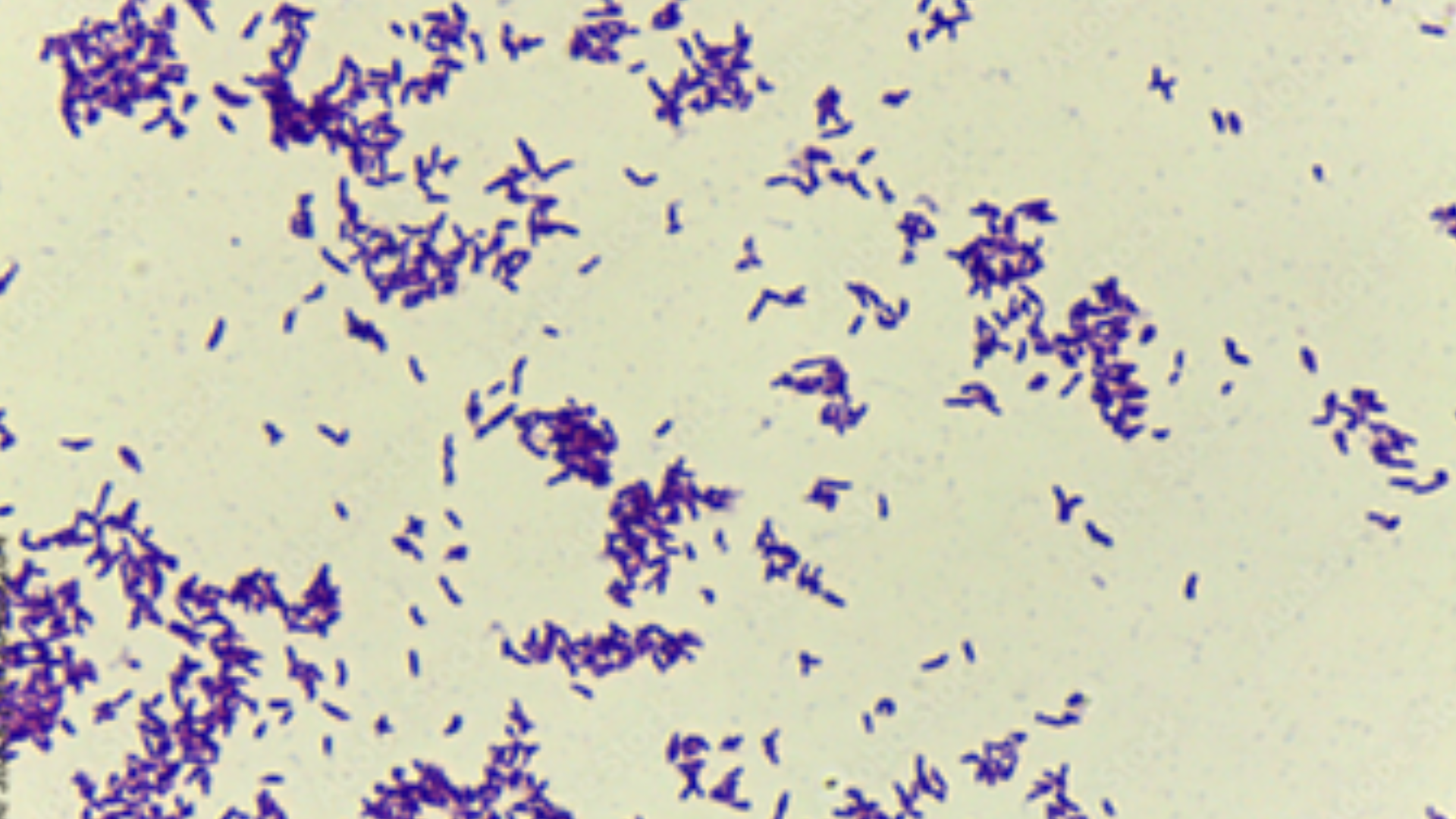
The basic protocol requirement is based on the execution of three successive disinfection cycles, carried out under identical conditions. Obtaining three consecutive compliant runs is essential to validate the immediate repeatability of the process and authorise its routine deployment.
BIOLOGICAL INDICATORS (BI): VALIDATION REFERENCE
Evidence of biological efficacy is based on the use of calibrated biological indicators (BI). The reference microorganism used is the spore of Geobacillus stearothermophilus :
● Population level: each medium contains a minimum initial population of 10⁶ spores (6-log).
● Rationale: this strain is chosen for its high resistance to hydrogen peroxide, establishing it as the most demanding industry standard.
↪ The BI validate microbiological destruction.
CHEMICAL INDICATORS (CI): VALIDATION OF DIFFUSION
In addition, chemical indicators (CI) are deployed. They allow for immediate visual verification of the correct distribution of hydrogen peroxide and the homogeneity of the treatment within the volume.
↪ CIs visually validate the air saturation kinetics.
INDICATOR MAPPING: THE WORST-CASE APPROACH
The positioning of the indicators results from a joint risk analysis aimed at identifying critical points or “worst-case” zones.
As Justine Mollier, Sales Manager at Oxy’Pharm, explains:
“During a performance qualification, we look for worst-case scenarios, i.e. critical points. At existing sites, the client is usually already aware of them. At new laboratories, it varies more.”
Each location must be supported by precise documentation in the protocol.
DETAILED MICROBIOLOGICAL PROCEDURE (AUDIT LEVEL)
At the end of each run, biological indicators are collected under aseptic conditions and then transferred to the laboratory :
- Inoculation: immersion in a selective culture medium, Tryptic Soy Broth (TSB).
- Incubation: kept in an incubator at 57.5 °C ± 2.5 °C for a strict period of 7 days.
- Reading: a daily check is carried out. Any appearance of turbidity indicates bacterial growth and therefore a failed run.


MICROBIOLOGICAL ACCEPTANCE CRITERIA
Validation of the run is based on three cumulative criteria:
- Positive control: an unexposed culture medium must show the expected growth (validation of viability).
- Negative control: an uninoculated culture medium tube must remain sterile (purity validation).
- Exposed BI: total absence of microbiological growth across all indicators distributed throughout the area (or compliance with triplicate criteria where applicable).
TRACEABILITY AND AUDITABILITY
Each step generates traceable and archived data.
↪ This systematic documentation ensures alignment with the ALCOA principles of data integrity and ensures inspection readiness.
6-log reduction: a key validation criterion
The concept of logarithmic reduction is the unit of measurement for the performance of a decontamination cycle.
SCIENTIFIC DEFINITION OF LOGARITHMIC REDUCTION
Logarithmic reduction mathematically expresses the effect of a process on a microbiological population. A 6-log reduction means that the population is reduced by a factor of 10⁶. If a surface initially has 1,000,000 spores, the treatment must reduce this number to fewer than 1 surviving spore.
REGULATORY CONSIDERATIONS
The validation of bio-decontamination cycles relies on the use of biological indicators, which generally contain a population of around 10⁶ spores. The absence of growth after treatment constitutes proof of the cycle’s efficacy, in accordance with the GMP requirements applicable to process validation.
According to Justine Mollier:
“This is precisely the objective of performance qualification: to demonstrate the efficacy of the bio-decontamination cycle on Geobacillus stearothermophilus spores, in a repeatable and reproducible manner under actual conditions of use.”
What PQ actually validates: evidence of process control
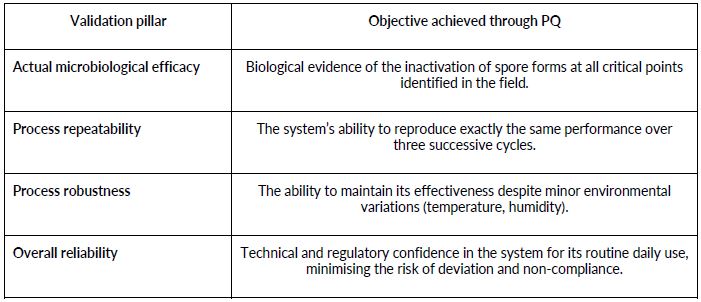
Beyond the figures, PQ provides factual certainty on four fundamental pillars :
Oxy’Pharm’s support: ensuring a critical, audited stage is secure

Aware of the major regulatory challenges facing validation managers, Oxy’Pharm has developed a bespoke support service.
According to Justine Mollier, Sales Manager at Oxy’Pharm :
“Every site has its own layout, technical constraints, installations and air treatment systems. It is therefore impossible to fully standardise a performance qualification. A preliminary study phase is essential to tailor the service to the client’s specific context.”
AN EXPERT, STRUCTURED AND SUPERVISED APPROACH
Oxy’Pharm offers an expert, non-automated service supervised by specialists with solid experience of pharmaceutical environments and cleanrooms thanks to industry-recognised training. As a designer and manufacturer of airborne surface disinfection solutions, Oxy’Pharm brings dual expertise in its deep knowledge of machine parameters and GMP requirements.
THE SUPPORT PROCESS IN 5 STAGES
The service, invoiced on the basis of a quotation following an analysis phase, is structured around a comprehensive process :
- Requirement gathering and technical analysis : review of plans, room classification, dimensions to betreated and microbiological objectives.
- Site visit and formalisation of the assignment : identification of physical constraints not visible on plans and preparation of the commercial proposal.
- Planning and documentation engineering : provision of a customised protocol framework and assistance indefining the indicator mapping (selection of worst-case points).
- Supervision and execution of runs : installation of decontamination equipment by Oxy’Pharm teams,management of diffusion parameters, positioning and retrieval of biological/chemical indicators.
- Delivery of qualification deliverables : provision of a comprehensive documentation package including rawresults, their interpretation and the necessary certificates, ready for use during inspections.
Justine Mollier highlights the benefits of this outsourcing:
“Using Oxy’Pharm is, first and foremost, a way to benefit from strong technical expertise […]. The second advantage is the time saved. We already have the necessary document templates and methodologies in place. This saves the client several days, or even weeks, of drafting documents. Lastly, the involvement of an external expert also provides an objective perspective and can be viewed positively during audits.”
SECTORS COVERED
This support is aimed at all industries subject to GMP and highly regulated environments, including the pharmaceutical industry, biotechnology, medical devices, biosafety laboratories (L3 / A3) and animal research facilities.
PQ: 5 key points to remember
- In situ validation : PQ validates microbiological performance under actual operating conditions, with thesite’s actual configuration and load.
- 6-log requirement : this is based on demonstrating a 6-log reduction in Geobacillus stearothermophilusspores.
- Demonstrated repeatability : successful PQ requires three consecutive compliant runs to validate processstability.
- Regulatory compliance : this provides the documentary evidence required by Annex 1 of the GMP andensures the required standard for auditors.
- Cross-functional approach : the final and indispensable link in the IQ/OQ/PQ validation continuum forensuring drug safety.
Further reading
↪ Find the foundations of the approach in Episode 1 : IQ / OQ / PQ — Understanding process validation in the pharmaceutical industry
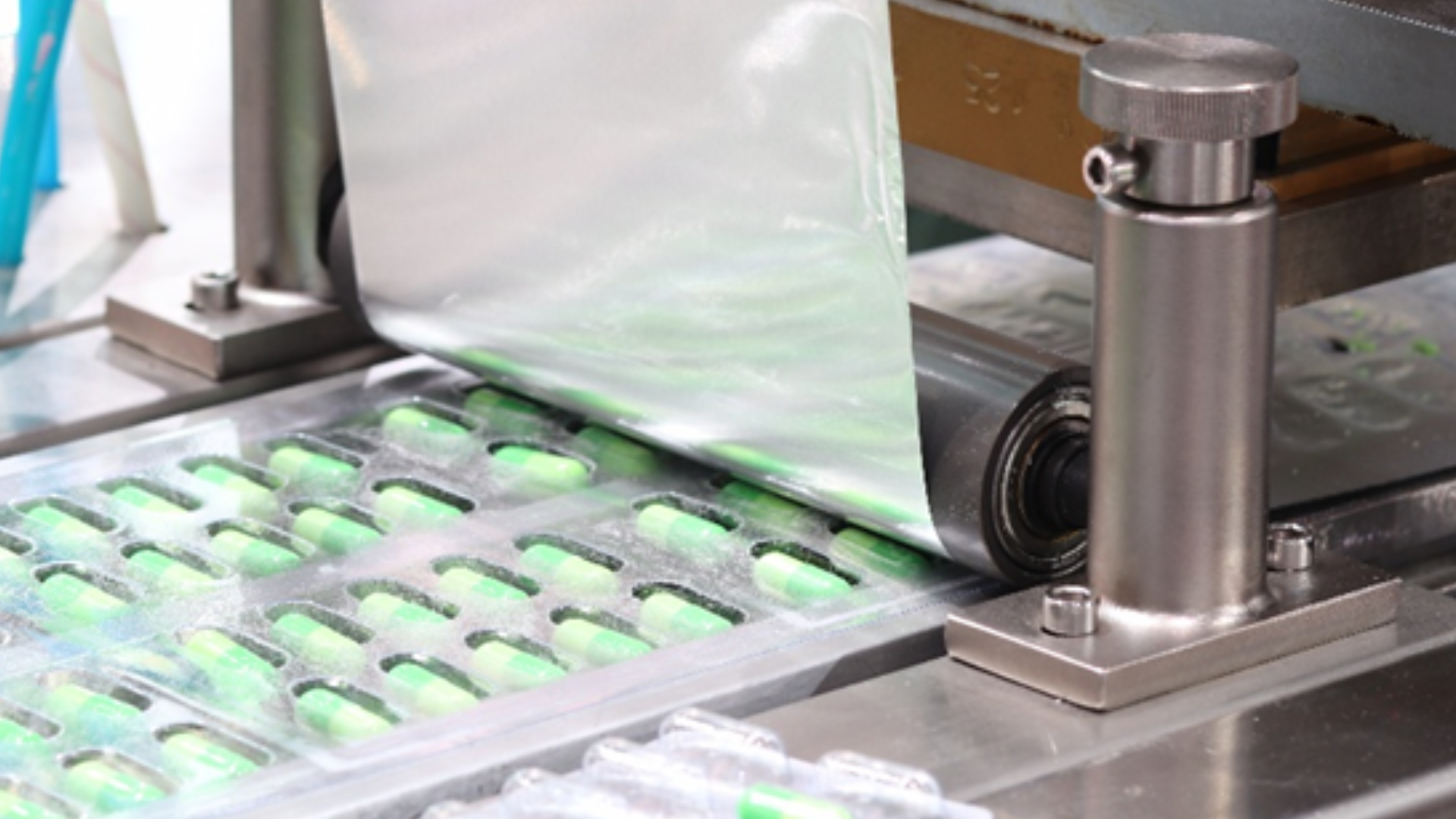
Performance Qualification (PQ) is the cornerstone of validation: it transforms theoretical performance into scientific proof of control under real-world conditions. Against a backdrop of increasingly stringent regulatory requirements (Annex 1 of the GMP), it stands as the final, indispensable barrier to ensuring drug safety.
Maintaining this validated status then relies on continuous monitoring, rigorous documentation control and periodic revalidations, ensuring the long-term performance of the process in routine operations.
Contact our Oxy’Pharm experts for structured support tailored to the most demanding environments (service provided on quotation).