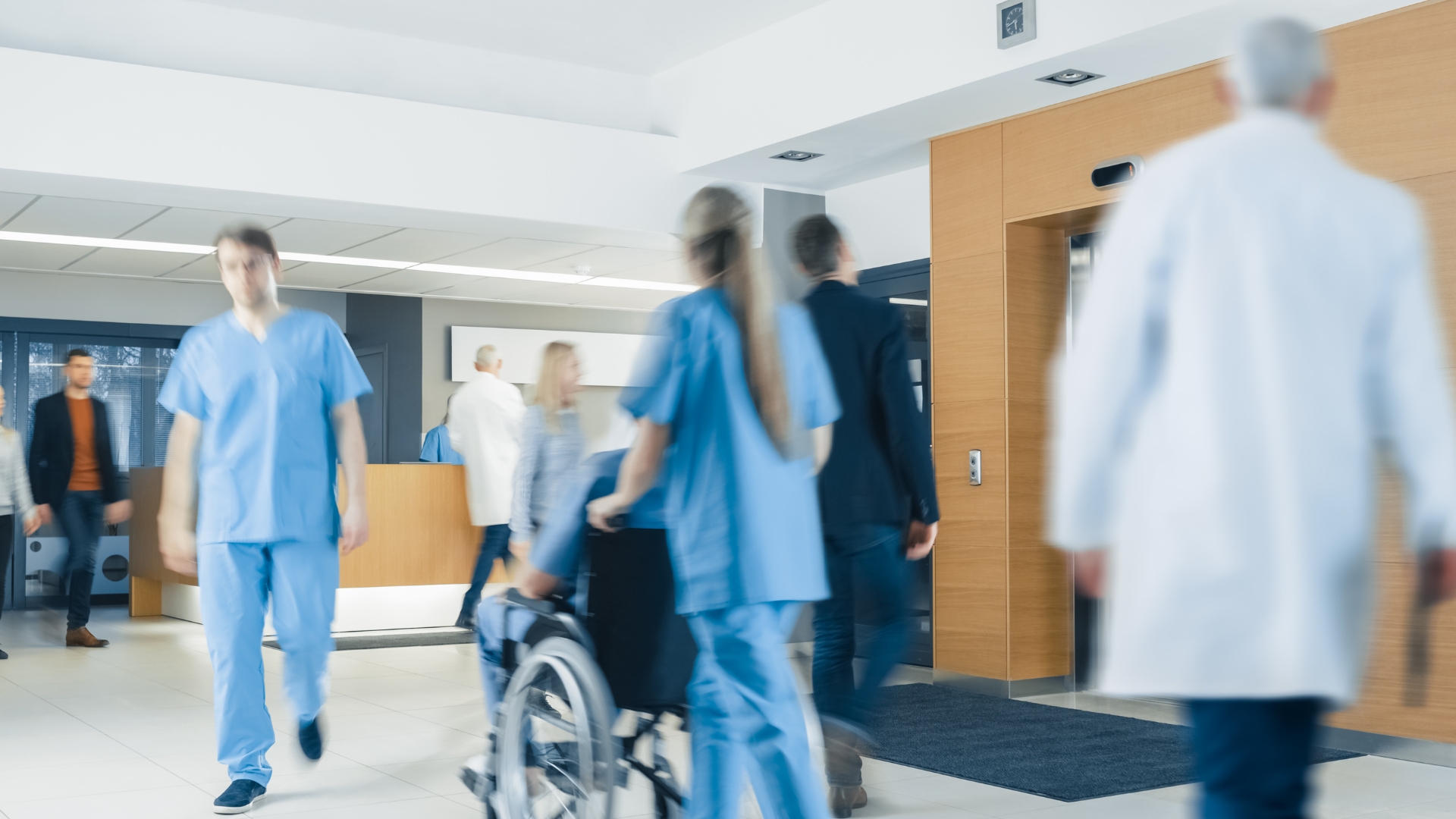
Oxy’Pharm develops highly effective, certified and eco-friendly hygiene protocols in hospitals.
Hygiene in hospitals : a daily challenge
In a context of increasing health and organizational pressure, healthcare facilities must combine rigor, efficiency, and compliance with standards, while ensuring the safety of patients and staff. Nosocomial infections, time constraints, staff shortages, and increasingly complex protocols make it essential to adopt effective and easy-to-implement solutions.
Oxy’Pharm responds to these challenges with a comprehensive and integrated approach based on the combination of two complementary technologies : Sanivap for high-temperature steam bio-cleaning and Nocotech for automated airborne bio-disinfection of surfaces.
This synergy makes it possible to develop hygiene protocols adapted to all levels of risk, compliant with the most stringent standards, and fully compatible with hospital surfaces, equipment, and schedules.
Hygiene challenges based on the critical status of hospital areas
An approach adapted to the different levels of risk and regulatory requirements of each care unit.
In a hospital, each area has a specific critical level, depending on the care provided there, the nature of the equipment present, and the vulnerability of the patients. This is why protocols are generally organized around four risk zones defined by healthcare facilities: from low risk (zone 1) to very high risk (zone 4), each zone requires appropriate measures in terms of cleaning, continuous or terminal disinfection, and environmental control.
Zone 1: Low risk
These are areas for general use such as offices, entrance halls, general rehabilitation areas, and staff eating areas. Cleaning focuses on visual cleanliness and reducing environmental contamination.
Zone 2: Medium risk
These include areas such as food preparation rooms, pharmacies, changing rooms, and non-critical care rooms. The aim is to limit cross-contamination through enhanced hygiene protocols.
Zone 3: High risk
Resuscitation, intensive care, endoscopy, sterilization, and medical, surgical, and obstetric (MCO) departments. These units often treat fragile patients and have sensitive technical equipment. Disinfection plays a central role here: it must be carried out with absolute rigor, monitored over time (traceability), and performed using methods that are compatible with the materials and medical devices present. Every action counts when it comes to limiting the risk of infection without compromising safety or the provision of care.
Zone 4: Very high risks
This includes operating rooms, transplant units, oncology, and burn care. These areas involve the most invasive procedures on the most vulnerable patients. The slightest contamination can have serious consequences.
This is why hygiene in these areas is based on terminal bio-disinfection protocols, carried out in the absence of human presence. The objective is to ensure complete control of contamination risks, both on surfaces and in the ambient air, while complying with the highest microbiological safety standards.
Sanivap & Nocotech : a proven expert alliance perfectly suited to hospital protocols
Faced with current hospital hygiene challenges, efficiency can no longer be considered in isolation. It must go hand in hand with the protection of human health and respect for the environment.
Oxy’Pharm enables healthcare facilities to meet these requirements, relying on two technologies designed to work in perfect synergy:
- Sanivap, for high-temperature steam bio-cleaning.
- Nocotech, for automated airborne surface disinfection.
Together, these solutions enable the development of rigorous, reproducible, and eco-friendly protocols in line with healthcare facilities’ CSR commitments.
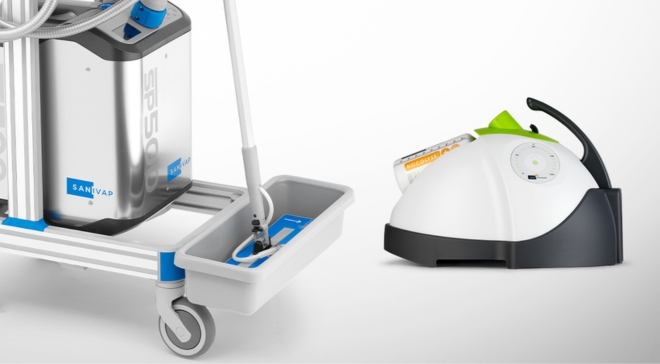
SANIVAP : HIGH-PERFORMANCE STEAM BIO-CLEANING FOR ALL AREAS OF THE HOSPITAL
In a hospital environment where hygiene requirements are constant, from the operating room to the care wards, including rooms, corridors, and radiology units, Sanivap is the ideal versatile, certified, and high-performance steam bio-cleaning solution.
Designed to meet the demands of everyday hospital life, this technology relies on the diffusion of high-temperature steam (150°C in the heating unit, 97°C at the accessory outlet) at a pressure of 5 bar. This controlled heat effectively eliminates dirt, microbial biofilms, and a wide range of pathogens, including multi-resistant bacteria, yeasts, viruses, and spores, thanks to the sporicidal action of high-temperature steam. Certified as a Class IIa medical device (GMED 0459) and approved by the NF T72-110 standard, the Sanivap range guarantees effective bactericidal, virucidal, fungicidal, and yeasticidal action without damaging even the most sensitive surfaces.
Under additional conditions defined by the standard, steam also has sporicidal activity, as confirmed by laboratory testing. Without the use of conventional chemicals, rinsing, residue, or corrosion, Sanivap reduces exposure risks for patients and staff while ensuring hygiene that is fully compatible with hospital requirements: treatment rooms, nurseries, operating rooms, vertical surfaces, medical furniture, and walkways.
The devices are robust and designed for intensive use (up to 10 hours per day without charging) and come with a wide range of ergonomic accessories including textile brushes, sanitary nozzles, steam mops and siphon covers. This means that protocols can be to each area of the hospital, including those with the highest and most complex demands.
Lastly, with its low water consumption, absence of consumables (bottles, sprays, wipes, etc.) and easy maintenance, Sanivap is fully in line with a sustainable and controlled approach to hospital hygiene, without compromising on safety.
NOCOTECH : AUTOMATED AIRBORNE SURFACE DISINFECTION
In hospital environments where controlling the risk of infection is an absolute priority, Nocotech provides a terminal bio-disinfection solution that is both reliable and easy to deploy in a variety of spaces including patient rooms, operating rooms, transplant areas, intensive care units, restricted access areas, and even small spaces such as microbiological safety cabinets (MSCs).
The principle is based on the automated diffusion of hydrogen peroxide (H₂O₂). This airborne process allows all surfaces to be reached uniformly, including complex or manually inaccessible areas such as under beds, corners, textiles, vertical surfaces, medical or electronic devices.
The Nocotech range includes several devices designed to adapt to all types of hospital volumes and configurations. It includes the Nocospray, the Nocomax for treating large rooms, and the Nocospray Kube, designed for small sensitive spaces such as microbiological safety cabinets (MSCs), isolators, transfer chambers, service hatches, and refrigerators.
All these devices are programmable: the volume to be treated is defined in advance, activation can be done remotely, and shutdown is automatic. No manual contact or rinsing is necessary, which makes operations safer and facilitates their integration into hospital protocols. The solutions used with the Nocotech range (Nocolyse, Nocolyse+, and Nocolyse Food) are all formulated with stabilized hydrogen peroxide, are peracetic acid-free, biodegradable, non-corrosive, and non-allergenic. They ensure complete disinfection while respecting sensitive materials, electronic medical devices, and the most restrictive hospital environments.
- Nocolyse (6% H₂O₂) is designed for regular or preventive disinfection.
- Nocolyse+ (12% H₂O₂) is recommended for situations with high microbial loads or enhanced curative protocols, particularly in critical areas.
- Nocolyse Food is Ecocert certified and specially developed for environments where food contact is possible, such as care offices, parenteral nutrition units, or hospital catering services.
All three offer excellent tolerance, leave no residue, and can be used safely in contexts where disinfection must not harm human health, equipment, or the environment.
Validated according to the EN 17272 standard, Nocotech technology ensures complete effectiveness against viruses, bacteria, yeasts, moulds, and spores. And for specific situations, such as bedbug, scabies, or flying insect infestations, it can be combined with the Oxypy+ solution for targeted, safe pest control.
With no contact and no product handling required, Nocotech protects both staff and patients while ensuring reproducibility and peace of mind.
Safety, simplicity, efficiency: the benefits of the Oxy’Pharm protocol for hospital hygiene
Reproducible and certified protocols that lighten the workload for teams while enhancing healthcare safety.
Integrating Sanivap and Nocotech into hospital bio-cleaning protocols means choosing certified, traceable, and reproducible solutions that simplify daily workloads while raising the level of healthcare safety.
This dual technology effectively meets the requirements of the field, with concrete benefits on several levels:
- Reduction of the risk of infection, including multi-resistant agents (MRAs) and spores, thanks to a combined action on all surfaces, visible or not.
- Improved working conditions for cleaning staff and caregivers: less handling of chemicals, less exposure to irritants, fewer repetitive movements.
- Operational time savings: steam cleans and disinfects in a single go, while automated diffusion simplifies terminal or curative disinfection.
- Reproducible protocols whose results can be evaluated, compliant with current hospital standards (NF T72-110 for Sanivap, EN 17272 for Nocotech), facilitating their integration into hygiene department action plans.
- Reduced consumption: less water, fewer chemicals, fewer consumables (bottles, wipes, gloves, etc.), which reduces both environmental impact and logistics costs.
- Enhancement of the establishment’s quality approach: clean and disinfected premises reinforce the confidence of patients and families, while facilitating audits and inspections.
Adopted by many hospitals in France and internationally, the Oxy’Pharm approach is part of a sustainable dynamic: protecting patients and teams without compromising on the environment or efficiency.
Real-life example – Feedback from Anne Goasdoué, hygiene manager in Hyères
Oxy’Pharm, a committed partner to healthcare facilities
In the hospital environment, Sanivap and Nocotech offer teams a comprehensive, effective solution that takes the realities of the job into account.
Designed for the most sensitive areas as well as everyday living spaces, these technologies enable the development of hygiene protocols that are effective, traceable, and eco-friendly, in line with regulatory requirements and real-life expectations.
Reducing the risk of infection, lightening the workload for teams, and protecting patients forms the comprehensive approach that Oxy’Pharm is committed to every day in its work with healthcare establishments.
Want to find out more ? Download our Healthcare brochure or contact us to arrange a personalized demonstration tailored to your establishment.
Hygiène hospitalière : retour d’expérience du CH Tarbes-Lourdes
At Tarbes-Lourdes Hospital, hospital hygiene protocols are implemented by a dedicated team consisting of a hospital hygiene practitioner, a hygiene manager, and four hygiene nurses.
The team works in a coordinated manner across the institution’s various sites. We were able to meet with Dr. Patrick Pina, head of the hygiene department and a trained biologist and pharmacist, as well as Karine Moreau, a hygiene manager and nurse.
CONTEXT AND CHALLENGES OF THE TARBES-LOURDES HOSPITAL CENTRE
The Tarbes-Lourdes Hospital Centre was created in January 2023 through the administrative merger of two separate establishments: the Tarbes Hospital Centre and the Lourdes Hospital Centre. Although the merger is now effective from an administrative standpoint, the two sites remain physically separate, with a new single hospital planned for 2029-2030.
To date, the Tarbes-Lourdes Hospital Centre is organized around five sites:
- Two MSO (Medicine-Surgery-Obstetrics) sites in Tarbes and Lourdes.
- Three geriatric care sites spread across the region, including medical care and rehabilitation services, nursing homes, and long-term care units
The hospital has a full range of technical facilities at each of its MSO sites, with many services requiring high standards of hygiene:
- Operating rooms.
- Resuscitation and intensive care services (including neonatology and cardiology).
- Nuclear medicine.
- Endoscopy.
- Laboratories.
- Haemodialysis.
In addition, it offers a wide range of care, including general medicine and several specialties such as infectious diseases, pulmonology, oncology, neurology, cardiology, endocrinology, nephrology, as well as emergency services at both main sites. With approximately 1,320 beds, the Tarbes-Lourdes Hospital Centre is a major hospital in the region, and as such faces multiple and complex hygiene challenges.
STEAM : STRATEGIC, TARGETED USE AND FUTURE APPLICATIONS
Dr. Patrick Pina and Karine Moreau begin by explaining that in the complex environment of the Tarbes-Lourdes Hospital Centre, hygiene still relies heavily on chemicals. Detergents, disinfectants, and descaling agents are used on a daily basis.
However, the teams are unanimously convinced of the effectiveness and ecological benefits of high-temperature steam and Sanivap technology.
If the use of Sanivap remains concentrated in certain departments or targeted situations, such as epidemic outbreaks, it is primarily because its application on a larger scale requires more equipment. For daily use across all sites and departments, all professionals would also need to be trained appropriately.
For the time being, at Tarbes-Lourdes Hospital, steam bio-cleaning is therefore seen as a complementary solution to chemical cleaning. However, a wider application is both desired and planned for the near future.
SERVICES EQUIPPED WITH DEDICATED SANIVAP DEVICES
Currently, operating rooms, intensive care units, and sterilization departments have been equipped with Sanivap devices, convinced by their effectiveness on complex surfaces, their visually remarkable cleaning action, and their ability to disinfect sensitive medical devices.
In intensive care, the Sanivap SP540H device is used, which has enhanced sporicidal activity, particularly to reduce the risk of infection associated with Clostridium difficile.
One of the three geriatric care sites is equipped with a Sanivap device, and equipping the other sites is already part of the establishment’s plans. In the meantime, a device is moved from one site to another as needed.
THE STRATEGIC USE OF STEAM IN AN EPIDEMIC CONTEXT
The teams use Sanivap in particular during epidemics (scabies, Clostridium difficile, highly resistant emerging bacteria, etc.) for occasional deep bio-cleaning of the rooms of affected patients.
Dr. Patrick Pina and Karine Moreau explain that currently, in the context of a highly resistant emerging bacteria epidemic, siphons are subject to specific protocols. In the rooms of affected patients, siphons are systematically steam cleaned with a Sanivap device equipped with a siphon bell – an accessory specially designed for this purpose.
Samples taken from the siphons showed effective decontamination after Sanivap treatment. This led to the purchase of new Sanivap devices and the systematic integration of steam into the bio-cleaning procedures for rooms after the discharge of infected patients.
“We have shown that siphons become compliant again after steam cleaning. This is what has enabled real acceptance from the teams, based on concrete evidence, in our facility,” says Dr. Patrick Pina
RENOVATING AGING PREMISES AND FURNITURE WITH SANIVAP
Sanivap devices are also used occasionally in aging premises to renovate various items of furniture or to refurbish certain rooms, particularly in geriatric facilities.
Karine Moreau highlights the teams’ enthusiasm for the Sanivap steam cleaner, which is in high demand in these departments. It is both its effectiveness in terms of hygiene and its renovation abilities that make the difference. The action of the steam visibly restores surfaces marked by time or intensive use, such as chairs or armchairs that are often stained on the armrests or seats.
Even after repeated chemical cleaning, some areas remain dull or dirty. With Sanivap, the results are immediate: biofilms are thoroughly removed without damaging the materials, giving furniture a new lease of life without having to replace it. This is a benefit that is appreciated both for the image of the establishment and for the improvement of the teams’ operating practices.
“When a Sanivap device arrives in a department, it’s like a Christmas present, a little extra that ultimately changes the routine. And the only frustration for the teams is not having enough time to steam clean everything. Because once you start and see the before and after, you don’t want to stop at just one area; you want to be able to do everything,” says Karine Moreau
“So, in the facility’s investment plan, we obviously want to expand the use of these devices.”
OTHER USES ENVISAGED FOR SANIVAP TECHNOLOGY
Dr. Patrick Pina also mentions several potential applications for steam, particularly on equipment that is difficult to disinfect. “We have a project to acquire steam cleaners dedicated to disinfecting incubators. These are devices with many hard-to-reach grooves, and the use of chemicals can be problematic, especially in a neonatal environment.”
He also cites pill dispensers and medicine cabinets, for which manual cleaning is often unsatisfactory. Here again, steam would improve efficiency while respecting the materials, without the constraints or residues of chemicals.
He also explains that the laundry that supplies them with linen has equipped itself with a Sanivap device with sporicidal action for disinfecting dirty linen cabinets.
Nocotech, an effective terminal disinfection tool in epidemic outbreaks
AIRBORNE SURFACE DISINFECTION : TARGETED BUT DECISIVE USE IN EPIDEMICS
Dr. Patrick Pina is very familiar with Nocotech technology, having already used it in other hospitals in the Paris region before joining the Tarbes-Lourdes Hospital Centre in 2016. Convinced of its effectiveness, he quickly proposed its introduction within the facility.
“We started with a single diffuser, then a second was acquired for the intensive care unit. Today, we have two devices, used according to need,” he says.
The intensive care unit receives particular attention when it comes to hygiene: the risk of cross-transmission is especially high there, due to intensive medical activity, the constant presence of invasive devices, and a large number of infected or high-risk patients.
In this context, the use of Nocotech makes perfect sense. “In intensive care, the level of activity leads to increased exposure to pathogens,” says Dr. Patrick Pina. “The risk of cross-contamination is even higher than in other departments.” Faced with these challenges, airborne disinfection has become a regular practice, alongside manual cleaning.
In other departments, while the use of Nocotech is generally occasional, it becomes a daily practice during epidemics. That is currently the case, in a particularly sensitive context: “We are facing an outbreak of CPE—carbapenemase-producing Enterobacteriaceae—whose environmental transmission is well documented. We now use airborne disinfection almost systematically when patients carrying the bacteria are discharged, and even for patients not identified as carriers, whenever there is a contamination risk.”
The system is used in addition to steam cleaning, which is particularly useful for disinfecting drains in affected departments. Dr. Pina emphasises this point: “Nocotech does not replace manual cleaning; it complements it. It is a terminal disinfection tool, not a cleaning one. That’s why combining the two technologies makes sense: Sanivap for detailed cleaning, and Nocotech to secure the inaccessible areas.”
AN ADAPTABLE RESPONSE TO VARIOUS RISK CONTEXTS
Beyond its use in CPE outbreaks, Nocotech is integrated into several specific disinfection protocols. For instance, the hospital plans to use it in cases of multidrug-resistant Acinetobacter baumannii contamination—a particularly concerning pathogen in intensive care. “We have a protocol ready to activate in such cases, although it has not been needed to date.”
The technology also proved invaluable during Covid-19, particularly at the beginning of the pandemic. “It enabled us to intervene in complex areas such as treatment rooms, storage spaces, and staff rest areas, where conventional cleaning is difficult. Drawers, cupboards, and equipment like dynamaps were deeply disinfected after manual cleaning.”
Occasional but strategic uses are also regularly identified—for example, in cases of scabies or bedbug infestations. In such situations, airborne disinfection offers a rapid, safe, and effective solution.
PROGRESSIVE ADOPTION AND PERCEIVED SAFETY : THE IMPORTANCE OF EDUCATION ABOUT NOCOTECH
For hospital teams, airborne disinfection with Nocotech has emerged as both an effective and reassuring solution—provided it is properly explained and incorporated into a rigorous protocol. “Once staff understand that the product diffuses throughout the room, even into areas inaccessible with standard cleaning, they immediately see the benefit,” says Karine Moreau. “You just open the drawers and cupboards, and the diffusion reaches every corner. The teams have been really impressed by it.”
However, this acceptance relies on proper support, especially during initial use. As Dr. Patrick Pina points out, it is essential to remind staff that the product used is hydrogen peroxide, which naturally breaks down into water and oxygen – leaving no toxic residue and reducing professional exposure to chemicals. “Once they understand that, staff themselves ask to use Nocotech. It shows they recognise its effectiveness and added value.”
One of the initial obstacles identified is the characteristic odour of the product if contact and airing times are not respected. “Like in many hospitals, we are often short on time,” says Karine Moreau. “Sometimes doors are reopened too early, which can make the smell more noticeable and cause some reluctance.”
Organisational adjustment is therefore crucial. Manual cleaning and airborne disinfection cannot be carried out simultaneously—they must follow one another, with mandatory contact and ventilation times. This sometimes requires rethinking logistical routines. “In departments where the ‘ladybird’ (as the device is nicknamed) is used daily, we have adapted our practices: patient discharges are scheduled towards late morning to allow sufficient time before the next admission,” says Dr. Pina. “It’s a constraint, but a manageable one – and now it has been fully integrated into the departments concerned during outbreaks.”
Once these new routines are established, teams perceive a greater sense of safety, which strengthens their commitment to using the device.
A response in line with environmental and societal concerns
The environmental impact of hospital disinfection practices is becoming an increasingly important issue in both public policy and among healthcare professionals. “Recently, like all hospitals in France, we were alerted to the issue of detergent and disinfectant discharge into wastewater systems,” explains Dr. Patrick Pina. “This eco-friendly approach, promoted by the health authorities and by society as a whole, invites us to rethink our practices. In this context, steam-based solutions clearly have a key role to play.”
The same applies to Nocotech, whose active ingredient – hydrogen peroxide – naturally breaks down into water and oxygen after diffusion. “It’s chemistry, yes, but clean chemistry that leaves no toxic residues. In the end, the only real waste is the plastic packaging,” he says. This is also a powerful argument when raising staff awareness, particularly among younger professionals, who are highly attuned to the ecological dimension of their work.
This environmental awareness also aligns with a broader mindset of equipment durability. Karine Moreau shares a revealing anecdote : “We happened to find an old steam cleaner stored at the back of a cupboard for years. After simply replacing the accessories, it was put back into service in another department. It works perfectly, and the staff were delighted to have it.” For her, this not only demonstrates the robustness of the equipment but also the growing commitment of healthcare professionals.
A shared hygiene culture in the service of care
For both Dr. Patrick Pina and Karine Moreau, the adoption of Sanivap and Nocotech technologies forms part of a broader philosophy: that of a proactive, rigorous, and responsible hospital hygiene culture. Their combined use – especially during epidemic situations – has proven effective in practice.
But beyond emergency contexts, the goal is to establish a lasting hygiene culture based on evidence, staff training, and continuous improvement of practices. “We have solid evidence to share with our colleagues and hygiene teams in other hospitals,” says Dr. Pina. “What matters most is effectiveness—and that’s exactly what we’re seeing, in both curative and preventive approaches.”
Convinced by the results, professionals at the Tarbes-Lourdes Hospital Centre are now quick to recommend these solutions. Not only that, but they are also happy to explain them, promote them, and advocate for them – a promising grassroots dynamic that benefits both patient safety and staff well-being.