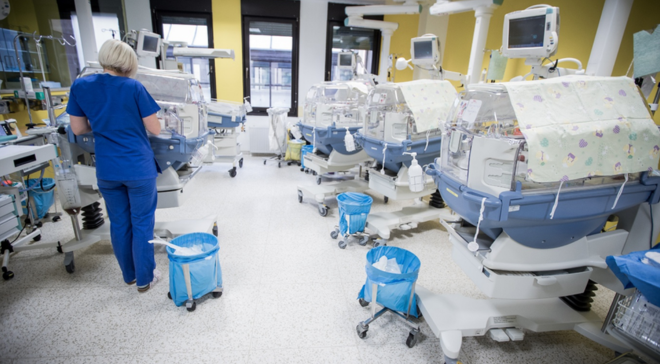
In neonatology, the bio-cleaning of the immediate environment of newborns – particularly incubators and heated cots – plays a central role in the prevention of healthcare-associated infections.
Bio-cleaning protocols are most often based on the use of detergent-disinfectants, which require large volumes ofwater and numerous single-use consumables. The environmental impact of these protocols, as well as the exposure to chemicals by cleaning staff and, potentially, the newborns under care, is now driving a shift in practices.
Healthcare facilities are seeking more environmentally responsible bio-cleaning methods, without compromising on infection control. Presented at the SF2H 2026, France’s leading annual infection control and hospital hygiene conference, a field study conducted by the Hospices Civils de Lyon demonstrated the benefits of steam bio-cleaning in neonatology in addressing this dual challenge.
The challenges of bio-cleaning in neonatology
NEWBORNS ARE PARTICULARLY VULNERABLE TO INFECTIONS [1][2]
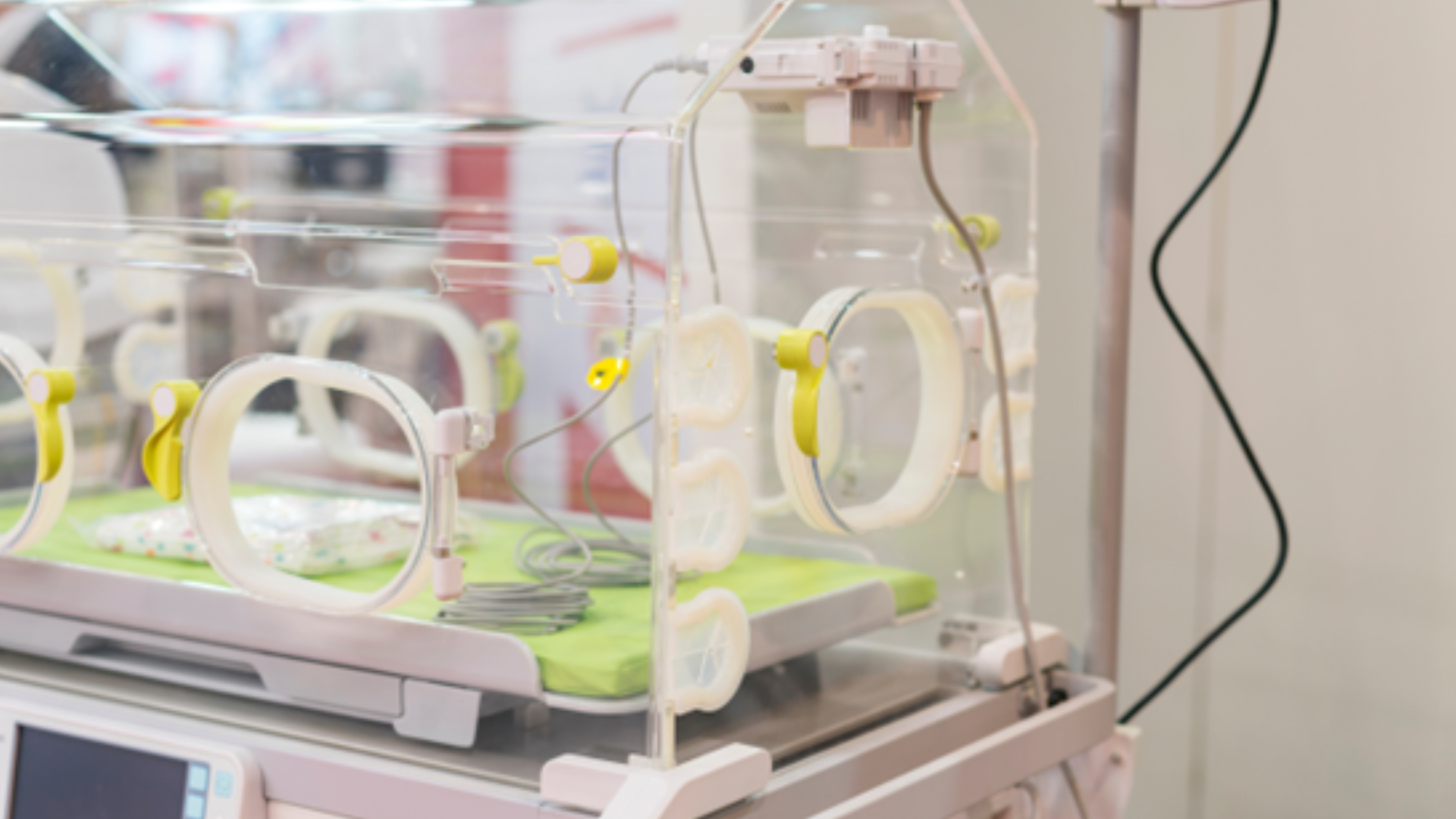
Birth marks a significant immunological transition. While sterile in utero, the newborn is rapidly colonised upon contact with the mother’s bacterial flora, followed by microorganisms from their environment, transmitted in particular via the hands of carers and parents and through breast milk.
Exposed for the first time to a wide variety of microorganisms, they are therefore at a higher risk of infection than at any other stage of life. This vulnerability stems primarily from the immaturity of the immune system and the fragility of the skin and mucous membranes, which are not yet sufficiently developed to fully fulfil their role as a barrier against infectious agents. This susceptibility to infection is even more pronounced in preterm infants.
In addition to these intrinsic factors, the conditions of hospital care present other challenges. Catheters, mechanical ventilation, parenteral nutrition and other invasive devices – essential for the survival of many newborns – create numerous entry points for microorganisms.
Despite advances in neonatology, healthcare-associated infections can still lead to serious complications, with potential repercussions for the child’s neurodevelopment.
A PARTICULARLY DEMANDING BIO-CLEANING PROCESS [3]
In healthcare facilities in France, the neonatal unit is classified as Zone 3, i.e. a high-risk infection area (the equivalent to FR1 in the UK). This classification requires a particularly rigorous frequency and protocol for bio-cleaning.[3][8]
Certain surfaces, such as changing tables, are cleaned and disinfected before and/or after each use.
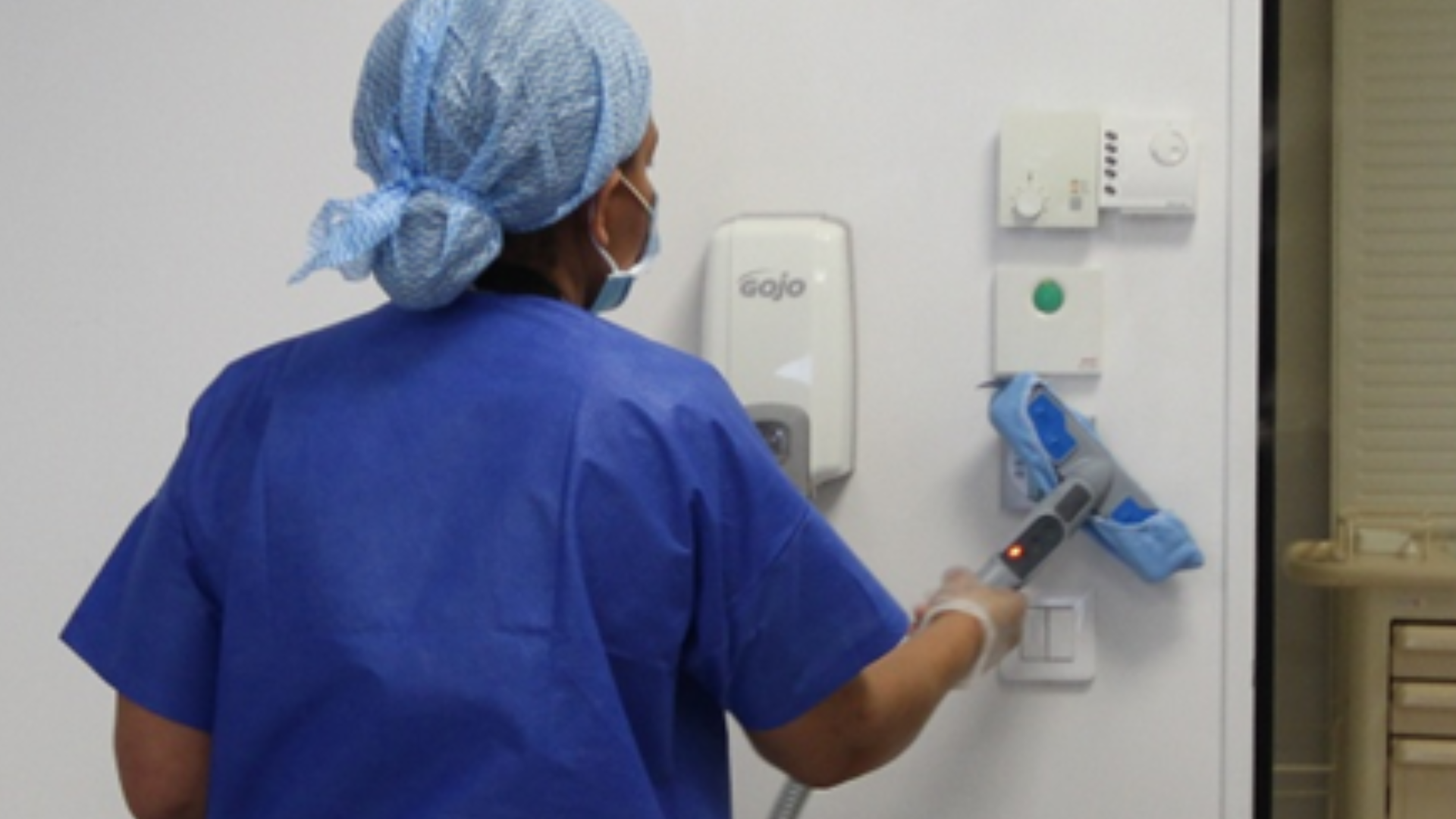
The entire immediate environment of the newborn is subject to daily deep cleaning, including incubators and heated cots, critical care trolleys, electronic equipment, furniture, water points, floors, door and furniture handles, and light switches.
When a patient is discharged, or following a prolonged hospital stay, the entire room is cleaned and disinfected, with certain medical equipment dismantled if necessary.
During an outbreak, the frequency of bio-cleaning may be increased and protocols adapted to the microorganism in question.
The effectiveness of bio-cleaning relies on formalised procedures (choice of equipment and detergent-disinfectant, contact, rinsing and drying times) as well as on staff training, the traceability of operations and the regular evaluation of practices.
WHY CHANGE BIO-CLEANING PRACTICES ?
The use of detergent-disinfectants consumes significant amounts of water and a large number of single-use consumables including cloths, washcloths, cleaning strips and gauze. Furthermore, the detergent and disinfectant products end up in wastewater, and certain ecotoxic substances accumulate in the environment.
In a 1,000-bed healthcare facility, bio-cleaning uses between 5 and 10 m³ of detergents and between 2 and 4 m³ of disinfectants each year.[5]
At the same time, staff responsible for bio-cleaning are exposed to these chemicals on a daily basis, which can cause skin, eye and respiratory irritation.
The use of these products also raises concerns about the exposure of newborns to potential chemical residues. The permeability of their skin and the fact that their organs are not yet fully developed mean that any contact with a chemical is extremely dangerous. Exposure to a chemical risk must not be the cost of avoiding a microbiological risk, hence the value of steam in routine bio-cleaning, carried out when the child is not present.
Practices must evolve towards a more judicious use of chemicals. Cleaning relies on four complementary factors: mechanical action, temperature, time and chemistry. One of the principles of eco-design in healthcare is to reduce the use of chemicals when mechanical or thermal action is sufficient to achieve the required level of hygiene.
The CPIAS, France’s network of support centres against healthcare-associated infections, recommends pre-soaking cleaning textiles in order to limit the quantities used. Steam-based bio-cleaning using a device compliant with the NF T 72-110 standard is also among the recommended alternatives.
Starting in 2021, the Hospices Civils de Lyon, which are committed to an eco-design approach to healthcare, chose to introduce steam bio-cleaning in their neonatal units. The teams then sought to scientifically document the impact of this change in practice through a field study presented at the SF2H 2026 conference.
Why is steam a credible alternative ? [9]
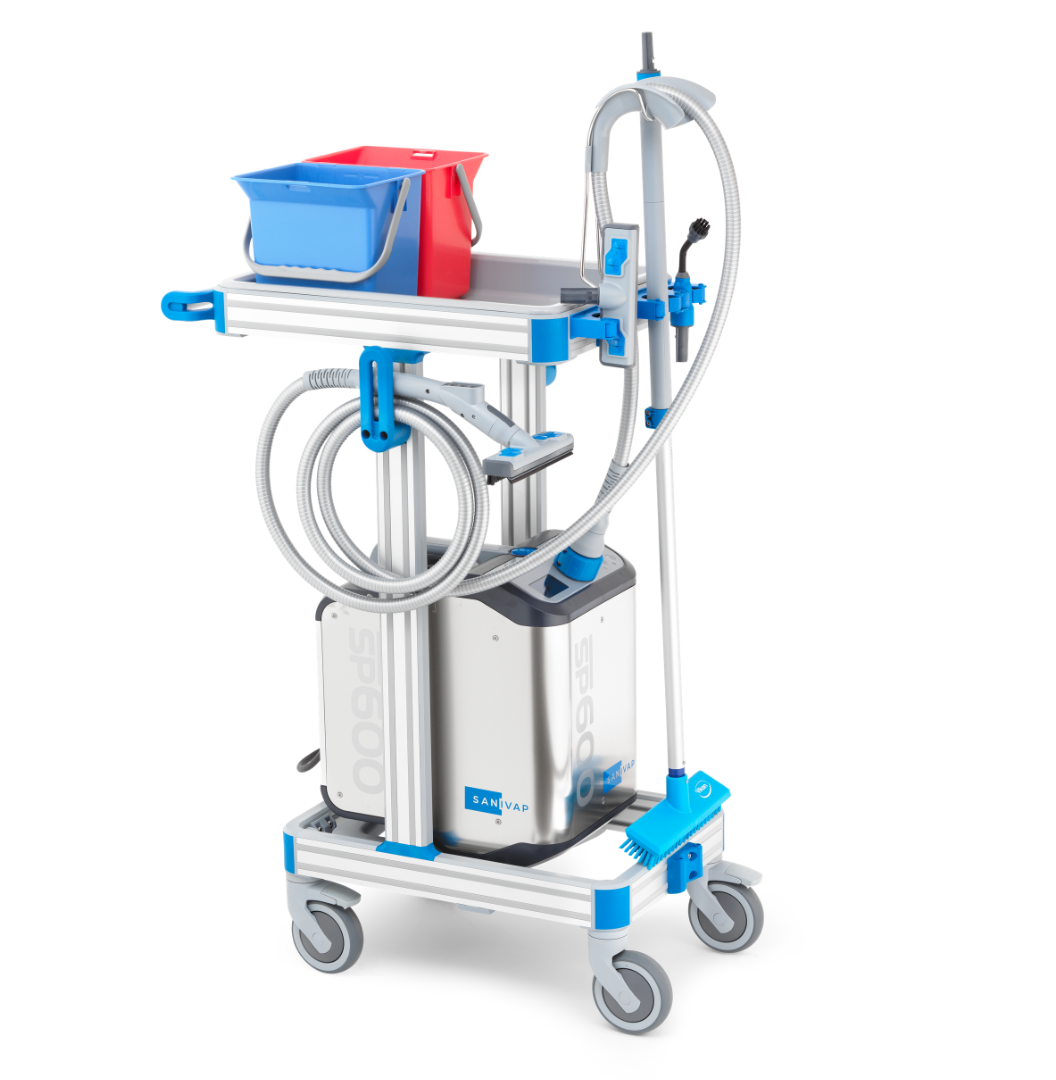
Steam bio-cleaning is based on the diffusion of high-temperature saturated steam (approximately 97 °C at the nozzle outlet) under pressure.
The steam penetrates into the smallest nooks and crannies to remove deposits and biofilms, whilst reducing the microbiological load on surfaces, all without the use of chemicals. Thanks to its thermal and mechanical action,
depending on the performance of the process used, steam can eliminate a broad spectrum of microorganisms including bacteria, yeasts, viruses and even spores.
Steam bio-cleaning also offers significant operational and environmental benefits. Chemical disinfection protocols require rinsing with microfiltered water to remove residues, followed by a drying phase before the equipment is reassembled. These steps extend the treatment time and increase water consumption. In contrast, steam biocleaning is carried out in a single stage, requires no rinsing and has been validated against Bacillus, thereby simplifying bio-cleaning procedures in neonatology.
This environmentally responsible method leaves no chemical residues and does not affect even the most delicate materials. It can therefore be used safely on surfaces in direct contact with newborns, such as incubator mattresses, heated cots and changing tables.
A study presented at SF2H 2026 evaluates steam bio-cleaning under real-world conditions
A FIELD STUDY COMPARING TWO BIO-CLEANING PROTOCOLS IN NEONATOLOGY [6][7]
To assess the benefits of steam bio-cleaning in neonatology, the Hospices Civils de Lyon conducted a prospective study comparing two bio-cleaning protocols applied to incubators and heated cots: the conventional method using a detergent-disinfectant and a method based on steam bio-cleaning. The results were presented at the three-day conference of the French Society for Hospital Hygiene (SF2H), France’s leading event in this field, in 2026.
The study examined 81 pieces of equipment used in real-world healthcare settings. Several criteria were assessed: the microbiological quality of bio-cleaning, as well as the consumption of water, detergent-disinfectants and single-use wipes, and the time required to carry out the protocols. The aim was to simultaneously evaluate the microbiological performance and the environmental impact of each method.
COMPARABLE MICROBIOLOGICAL EFFICACY, WITH SIGNIFICANTLY REDUCED RESOURCE CONSUMPTION [6][7]
The results show that steam-based bio-cleaning achieves microbiological efficacy comparable to that of the conventional protocol. The number of non-compliant microbiological samples remained low with both methods, with no statistically significant difference.
At the same time, the steam protocol significantly reduced the resources required for bio-cleaning:
- 50% less detergent-disinfectant
- 41% less water
- 34% fewer cleaning cloths
These results show that, thanks to steam-based bio-cleaning, it is possible to significantly reduce the use of chemicals, water and consumables, whilst maintaining a level of microbiological performance comparable to that of conventional bio-cleaning.
The eco-design guide published by the Hospices Civils de Lyon also reports a 55% reduction in operating costs with steam-based bio-cleaning compared to the chemical method, corresponding to a return on investment of less than two years.[4]
A CALL FOR VIGILANCE REGARDING SPORE-FORMING BACTERIA [6][7]
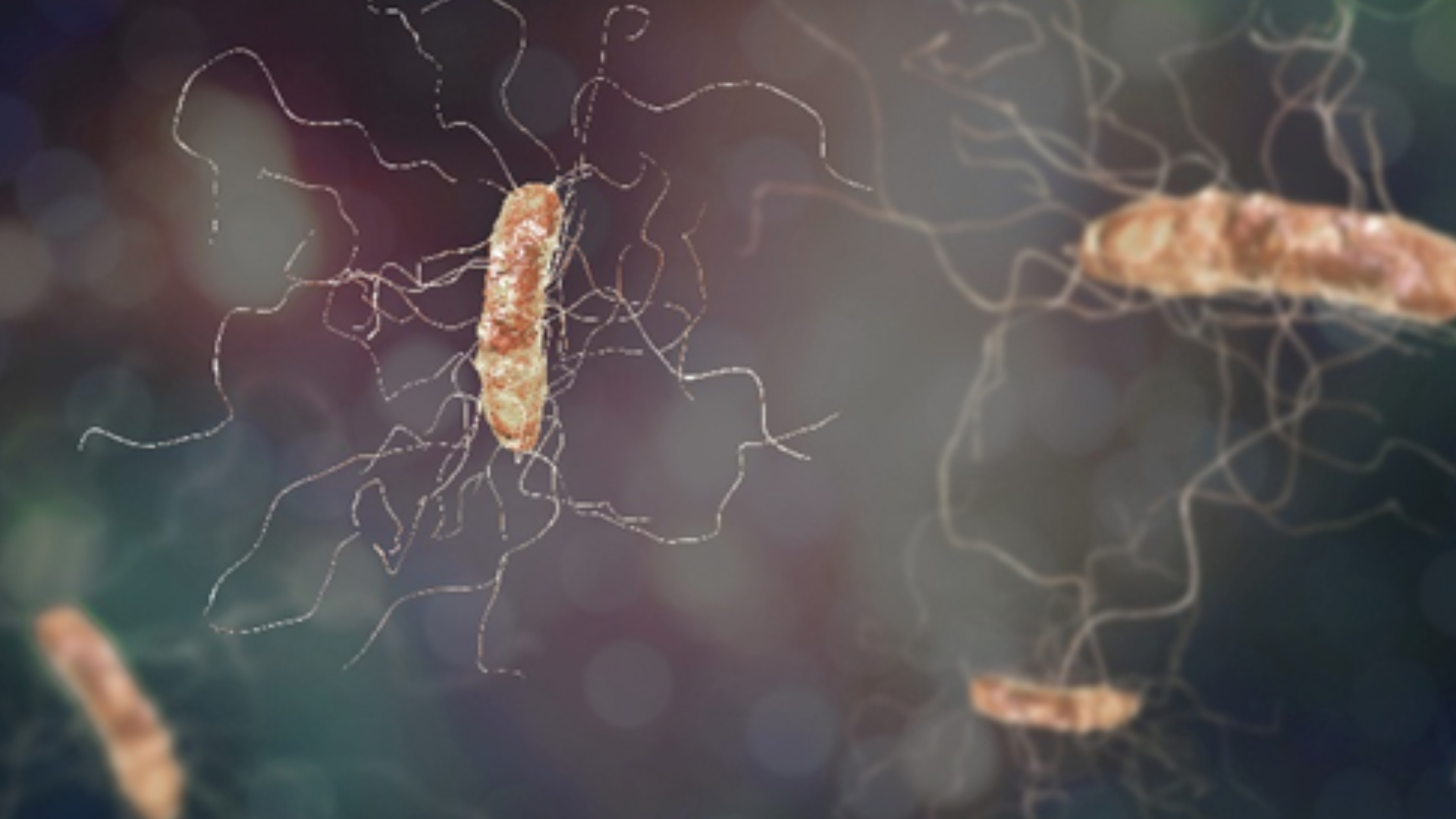
The authors emphasise, however, the need to remain particularly vigilant regarding spore-forming bacteria, notably Bacillus spp., regardless of the biocleaning protocol used (steam or chemical). In neonatology, these bacteria are subject to enhanced surveillance due to their ability to form particularly resistant spores, to persist in the hospital environment and to be implicated in episodes of nosocomial transmission among highly vulnerable newborns.
In practice, achieving sporicidal activity with chemical methods requires the use of strong oxidising agents, which are often validated only for Clostridioides difficile and not for Bacillus spp. Their use is also
more burdensome for healthcare professionals and raises concerns about chemical residues on surfaces in neonatal units.
Controlling spore-forming bacteria remains a major challenge in neonatology and justifies the maintenance of rigorous protocols as well as appropriate microbiological surveillance.
The results presented at the SF2H 2026 conference show that a steam bio-cleaning protocol can significantly reduce the use of detergent-disinfectants, water and consumables, whilst maintaining microbiological performance comparable to that of conventional bio-cleaning.
Steam therefore represents a tool that healthcare facilities can employ in their efforts towards eco-design in healthcare and corporate social responsibility (CSR). It meets the growing expectations of healthcare facilities in terms of environmental performance, waste reduction and quality of life at work.
To promote sustainable healthcare, Oxy’Pharm supports this shift towards eco-responsible practices with its Sanivap range – steam-based bio-cleaning solutions compliant with the NF T 72-110 standard, designed for healthcare environments with stringent microbiological requirements.
Main sources:
[1] Letouzey M., Boileau P., Foix-L’Hélias L., Early and late-onset neonatal bacterial infections, Journal de Pédiatrie et de Puériculture, Volume 35, Issue 6, 2022, Pages 284–292. Available at: https://www.sciencedirect.com/science/article/pii/S0987798322001104
[2] Doit C., Biran V., Aujard Y., Nosocomial infections in neonatal units. Neonatal Infections. 2015:91–106. Available at: https://pmc.ncbi.nlm.nih.gov/articles/PMC7152006/
[3] CPIAS Auvergne Rhône Alpes, Bio-cleaning in neonatal care, 2024. Available at: https://www.cpiasauvergnerhonealpes.fr/sites/default/files/2024-10/2024-FP-Neonat-Bionettoyage.pdf
[4] Hospices Civils de Lyon (HCL), Guide to Eco-design in Healthcare, January 2026. Available at: https://www.chulyon.fr/sites/default/files/guide-ecoconception-soins.pdf
[5] CIPIQ-S, ‘The Unexpected Impact of Hospital Hygiene on the Environment’, Le Journal du Médecin, no. 2767, 1 December 2023. Available at: https://cipiqs.org/wp-content/uploads/2024/01/Article-CIPIQ-S-JDM-2023-12.pdf
[6] SF2H, 36th National Congress of the French Society for Hospital Hygiene, June 2026. Available at: https://www.sf2h.net/k-stock/data/lille_2026/SF2H_Livres_Resumes_Lille_2026.pdf
[7] Gerster L. et al., Steam bio-cleaning in neonatology: striking the right balance between infection risk and environmental responsibility, SF2H, Lille, 3–5 June 2026.
[8] Maintenance of premises in healthcare and social care facilities – Recommendations for good practice, November 2017, CPIAS Occitanie, CPIAS Nouvelle-Aquitaine. Available at: https://www.cpias-ile-de-france.fr/docprocom/ems/CPiasOccNA_Entretien_Locaux_2017.pdf
[9] Oxy’Pharm, Sanivap, steam bio-cleaning [Internet]. Available at: https://www.oxypharm.net/sanivap-bionettoyage/e